





Back
SEARCH AND PRESS ENTER
Recent Posts

Q&A with Dr. Ansley Baccus: Enjoying Medical Education

Kendrick Yu, MS3 at the University of Birmingham Heersink School of Medicine, interviews Dr. Ansley Baccus, a family medicine physician and family medicine clerkship director, on the inner workings of medical education and how students can position themselves for growth. Dr. Baccus shares her inspirations and goals as a practicing physician and clinic director, along with valuable advice and insights for current medical students.

Editor’s Note: Questions and answers are not direct quotations. Paraphrasing and edits were made to accommodate for the article’s flow and style. The interview was held via Zoom. 
Kendrick: Could you introduce yourself?

Dr. Baccus:My name is Ansley Baccus. I am from North Alabama, did my undergraduate and medical school at the University of Alabama at Birmingham (UAB; 2015), and I did my family medicine residency in Tuscaloosa, Alabama (2018). I started out in private practice but quickly found a passion for academics in 2022, so I returned to the Tuscaloosa residency program to work with medical students and residents. Within 2 years, I took over for the family medicine clerkship.


Kendrick: Although you started off in private practice, was education ever planned to be a part of your future?

Dr. Baccus: It [education] was always part of what I did in undergrad as a chemistry major. I was a chemistry teaching assistant, tutored, and I come from a long line of family members that are teachers. My dad was a teacher and now a principal, and my sister is currently a science teacher… But when I first got out of medical school and residency, I felt like I needed to get away and stretch my legs.

My husband, an internal medicine physician, partnered with his residency program immediately, and he would do rounds in the hospital and took medical residents to my clinic. I would help them with things like women’s health procedures, and I also partnered with the local nursing school and had nurse practitioners rotating through the clinic. I quickly realized that teaching them was the fun part of my job and made it my full-time job.


Kendrick: When it comes to being the head of the family medicine clerkship, are there specific principles or priorities you have when approaching medical school education?

Dr. Baccus: The basis of family medicine is long term relationships with the patients and getting involved with the community. You treat the patient, not the disease. Instilling this idea in students is the cornerstone of family medicine. But overall, I want to ensure my students are enjoying themselves in academics and striving to be lifelong learners because that is necessary in this field.


Kendrick: How do you think a positive learning experience changes a student’s perspective on medicine as a whole?

Dr. Baccus: I remember being a student, getting bogged down and worrying, “Am I getting the right answer? Am I doing the right thing? Am I checking the right boxes so my preceptor can give me honors?” Because I was worrying, I missed the fun of learning new things and valuing the process of learning. It is also important to never forget you are taking care of real people. You are an integral part of their care even if you are “just a medical student.” The decisions you help make as part of the healthcare team affect their lives. Sometimes this is lost in the noise of the medical grading system, and you shouldn’t learn for the multiple-choice question. You should learn for your life and future patient care. I think these concepts are hard to grasp when bogged down by studying.


Kendrick: What mindset do you see in students that are successful in medicine?

Dr. Baccus: I think being open-minded and adaptable. You never know what situation you will be in or what type of patient will walk through the door. If you’re so focused on the right thing, you may miss the minutia and the small things. Taking the pressure off yourself and being more open-minded is a good quality to have… in family medicine and different communities, you meet with all types of people. You must be open to types of lifestyles, ages, religions, and backgrounds. Some speak different languages so, being comfortable with interpreters. You have to be nonjudgmental and be open to the things that you don’t understand. You might have to get the patient to explain to you because you want to treat the patient in THEIR environment.


Kendrick: Not everyone is good at doing these things when they first enter the clinic. What are some goals that students can set for themselves to grow?

Dr. Baccus: First, self-reflection and understanding where your areas of weakness are. This is hard, but finding an area, such as taking patient history, taking notes while the patient is talking, performing parts of the physical exam, and being open with your preceptor on what you want to improve on. Finite and small goals. Maybe the whole patient history is too broad to work on but maybe it’s asking pertinent questions for hypertension or getting better at social history. Getting a preceptor to note what you are trying to improve on will help them help you a little bit better.


Kendrick:  Do you feel like there was something that you wish your medical education had that you are trying to implement in your current teaching?

Dr. Baccus: I think… feeling like you’re an integral part of the team instead of being on the lowest level of the totem pole and developing a relationship with the preceptors that I did not get. I want to show students that we [physicians] are humans and are not infallible. We make mistakes. I try to get closer to students through events and student-led activities to make them feel comfortable. I learned that being comfortable leads to a better learning environment compared to something that is extremely stressful. I want students to look forward to the clinic because you have a relationship with the person that’s teaching you.


Kendrick:  What should a medical student’s MAIN goal in their clinical rotations be?

Dr. Baccus: It’s more important to enjoy learning than the grade. It is getting more difficult to do this with STEP 1 turning into pass/fail. Everyone is trying to find ways to distinguish themselves in their residency applications. The worry shifted from STEP 1 grades to STEP 2 scores, honoring the clerkship, and research and publications. In worrying about the future, students don’t take part in and appreciate the present, so we lose the value of the learning experience. I would like to really encourage students to let go of the worry. When you learn and enjoy what you are doing, and you are doing it for the right reasons, you will ultimately stand out compared to if you were gunning for a specific grade.


Kendrick:  As an educator, what motivates you to continue teaching?

Dr. Baccus:  It’s the small things like seeing a student finally grasp a topic or nail a presentation. Every little thing the student does well, and you can see their face light up. Those are the small wins that I celebrate. Each time I see that, it reinforces that I am doing what I should be doing. This culminates in match day when I see the students I developed a relationship with and thinking about the small role I may have played in their development. It’s all paid off when I see them walk across that stage. I enjoyed your match days more than mine. Seeing the scared first year to the competent fourth year and seeing how you are excited about medicine.


Kendrick:  Anything else you would like to tell the students?

Dr. Baccus:  Ultimately, it’s worth it and you will get there. It’s hard to see that in the beginning. I didn’t have a good medical experience. I was not a great student, and it was hard for me. I made it through, and I believe anyone else can for the right reasons. So, going in with an open mind and doing it for the right reasons, you’ll ultimately get there. But don’t forget to take care of yourself in the process. You need to eat. You need to sleep. You need to have relationships and get out of the house. So, take care of yourself. You can’t take care of others if you can’t take care of yourself.
Also, your colleagues are your family. Lift them up because you never know what they are struggling with, and your small act of kindness may be the thing that gets them through difficult times. Support your fellow students and celebrate each other’s accomplishments!


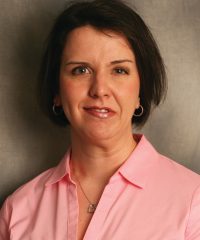
Ansley Baccus

Ansley Omega Hairrell Baccus, MD

Family, Internal, and Rural Medicine Clinic Director

Dr. Baccus is a native Alabamian and family medicine physician, graduating from UABHSOM in 2015 and Tuscaloosa family medicine residency program in 2018. She has been in medical practice for 6 years, academia for 3 years and the family medicine clerkship director for 2 years with a professional interest in education and lifestyle medicine. She is happily married to fellow internal medicine physician, Dr. Jon Tyler Baccus and they have 2 children: Elijah, 7 years, and Delilah, 2 months.