


Back
SEARCH AND PRESS ENTER
Recent Posts

Judgment, Responsibility, and the Physician in the Age of AI

By Sanghyun Alexander Kim, MD

Artificial intelligence is often discussed as a technological turning point in medicine. Dr. Sanghyun Alexander Kim approaches this moment from a longer view—one shaped by years of surgical practice, training across generations of physicians, and reflection on how doctors are formed by responsibility, uncertainty, and culture.

This essay moves from the personalities drawn to medicine, to how physicians change through training and specialty choice, to the quiet expectations placed on doctors to endure without complaint. AI enters the story not as a threat, but as a clarifying force—revealing what medicine has always demanded and what cannot be delegated: judgment, accountability, and moral ownership of decisions.

We publish this perspective in the Career Development section because it speaks to professional identity at a moment of transition. As medicine evolves, Dr. Kim reminds us that the most important work of becoming a physician happens not through technology, but through experience—and the willingness to carry responsibility forward.

— The Editors, NexBioHealth

tae0009a1809

After many years of practicing medicine, most of them spent as a surgeon, I have learned that physicians are not defined primarily by how much they know, but by who they are. I have spent countless hours in operating rooms, clinics, conference rooms, and hospital hallways. I have trained residents and fellows, worked alongside internists, family physicians, anesthesiologists, and nurses, and watched generations of doctors grow into their roles.

What follows is not a scientific analysis or a personality inventory. It is a personal reflection on the kinds of people who choose medicine, the personalities that gravitate toward different specialties, and how those identities must now evolve as artificial intelligence reshapes the profession.

Who Applies to Medical School

One of the most common questions I am asked by parents, students, and colleagues is deceptively simple. What kind of person becomes a doctor?

The easy answer is intelligence and discipline. The truer answer is more complex.

Medical school applicants tend to share a recognizable personality profile. They are achievement oriented, highly responsible, and often deeply self critical. They are rarely satisfied with good enough. Many have spent most of their lives striving toward grades, test scores, accolades, and external validation.

Among Korean and other East Asian students in particular, this drive is often amplified by cultural expectations. These individuals learn early how to carry not only their own ambitions, but also the hopes of their families. They become skilled at tolerating pressure, delaying gratification, and performing under sustained stress.

At this stage, empathy is frequently discussed but not always fully developed. What stands out more clearly is focus. The ability to endure long hours, deferred rewards, and constant evaluation is often what distinguishes those who make it into medicine.

How People Change When They Become Physicians

Applying to medical school and becoming a physician are fundamentally different experiences.

Once young doctors begin caring for real patients, they quickly realize that medicine rarely offers certainty. Symptoms are ambiguous. Data is incomplete. Outcomes are unpredictable. Decisions must still be made, often with lasting consequences.

Over time, physicians develop a tolerance for uncertainty that few other professions require. They learn how to act without complete information and how to live with the results of those decisions.

As a surgeon, this reality is especially vivid. In the operating room, there is no pause and no consensus vote. At critical moments, responsibility rests on one person. That weight reshapes how one thinks and feels. It teaches emotional control, intellectual humility, and acceptance that perfection is unattainable even when lives are at stake.

Empathy also matures. Early in training, empathy is often emotional and immediate. With experience, it becomes steadier and more deliberate. Clinical empathy is less about sharing distress and more about presence, clarity, and accountability.

Why Personality Shapes Specialty Choice

After observing hundreds of physicians choose their specialties, it has become clear to me that this decision is rarely about prestige or income. It is about psychological fit.

Surgeons tend to be decisive and action oriented. Many of us find meaning in fixing problems directly and seeing tangible results. We are often less expressive emotionally, yet deeply invested in ownership and responsibility. Surgical outcomes remain with us long after the case is finished.

Internists and primary care physicians often display a different kind of strength. They are relationship centered, patient, and comfortable with long term uncertainty. Their work unfolds over months and years rather than hours. It demands sustained attention, communication, and trust.

Neither disposition is superior. Each thrives in a different tempo of medicine. Difficulty arises when physicians practice in environments that conflict with their natural tendencies.

Cultural Expectations Placed on Physicians

In many cultures, particularly Korean culture, physicians have long been expected to be endlessly resilient. Strength is admired. Vulnerability is rarely encouraged.

Many doctors of my generation were trained to believe that exhaustion and sacrifice were simply part of the profession. While this mindset produced dedicated physicians, it also led to quiet burnout.

Younger physicians are now more open about boundaries, mental health, and balance. This shift is not a weakness. It is a necessary correction.

The Arrival of Artificial Intelligence

Artificial intelligence is now rapidly entering every domain of medicine. It assists with imaging interpretation, diagnostic reasoning, workflow optimization, and surgical planning. In some areas, it will soon surpass human speed and accuracy.

It is reasonable to ask whether physicians and surgeons will be replaced.

I believe this question misunderstands the essence of medicine.

Artificial intelligence excels at pattern recognition and data synthesis. What it lacks is moral responsibility, contextual judgment, and human presence. When information is incomplete and values conflict, a physician must still decide and accept responsibility for the outcome.

How the Physician Must Evolve

The future physician will not be defined by memorized knowledge or technical execution alone. The role will increasingly be one of integration.

Internists will translate algorithmic insights into care that reflects a patient’s life circumstances and values. Surgeons will combine advanced technology with judgment, adaptability, and ethical responsibility.

In the coming decades, physicians will be valued less for what they can calculate and more for what they can interpret and decide.

Final Thoughts

After more than two decades in medicine, one truth stands out clearly. Physicians are shaped over time.

They are formed by responsibility, uncertainty, failure, and reflection.

As artificial intelligence transforms the technical landscape of healthcare, the core of medicine will remain human. The physician who thrives will not compete with machines, but will rise above them by offering judgment, compassion, and accountability.

Physicians are not defined solely by intelligence or training.

They are shaped by self awareness, adaptability, and a willingness to grow with their era.

Sanghyun Alexander Kim_Bio

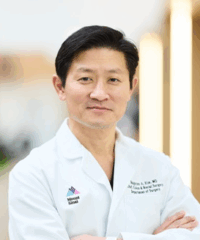
Sanghyun Alexander Kim, MD

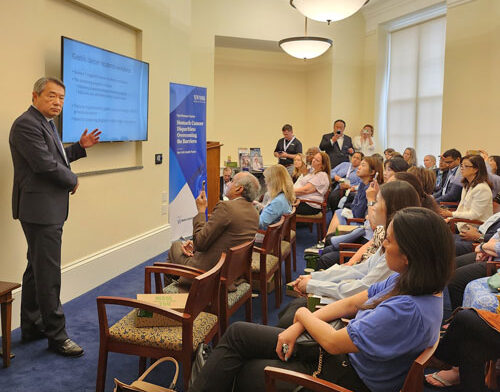
Dr. Sanghyun Alexander Kim is a colorectal surgeon at Mount Sinai who immigrated to the United States from Korea at age 17 and completed his education, medical training, residency, and fellowship entirely in New York. He joined the Mount Sinai surgical faculty in 2005 and currently serves as Program Director of the Robotic Colorectal Surgery Fellowship, where he trains surgeons in advanced minimally invasive techniques.

Dr. Kim’s clinical practice focuses on colon and rectal cancer, inflammatory bowel disease, fecal incontinence, robotic colon and rectal surgery, and painless hemorrhoid treatment. He also has a large clinical practice performing high-resolution andoscopy, a specialized camera-based examination used to detect precancerous lesions and early anal cancer. In addition to caring for patients, Dr. Kim actively teaches medical students, residents, and surgeons, with a strong commitment to early cancer detection and serving diverse and underserved communities throughout New York and New Jersey.