




Back
SEARCH AND PRESS ENTER
Recent Posts

The Future of Global Surgery Starts Here

By Dr. Linda Zhang and Eva Ingber

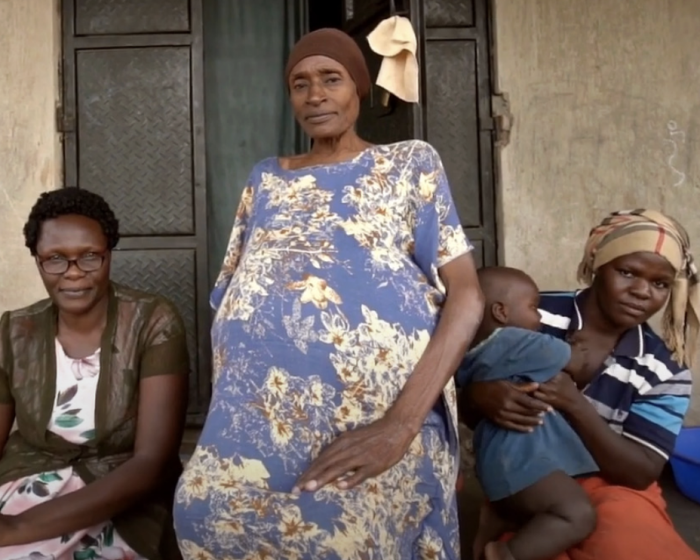
Photo Courtesy of The Kyabirwa Surgery Clinic

Madina Kyomugisha’s distended abdomen looked much like the natural swelling of a pregnant belly. As the mother of six children in a rural Ugandan village, Madina wondered at first whether she had perhaps conceived another child—but when nine months passed and her abdomen kept painfully growing, Madina knew something was wrong. She tried herbal remedies, searching for ways to alleviate her discomfort and shrink her growing stomach. Nothing worked. She became resigned to her fate, certain that death inevitably loomed.

Madina lived with an ovarian cyst for nearly eight years before she was serendipitously brought to the attention of the Kyabirwa Surgical Clinic in Jinja, Uganda. Dr. Joseph Okello Damoi, the head surgeon at Kyabirwa Surgical Center, along with Dr. Ann Tran from Mount Sinai, together performed a groundbreaking teleproctored surgery to remove the ovarian cyst and save Madina’s life. At the time of removal, the cyst contained roughly twenty-four liters of dark, cloudy fluid, and had attached to various organs in her abdomen.

The surgery was a great success. Within several hours of the procedure, Madina was back on her feet and walking. Two days later, she went home and follow-up care was continued remotely. Upon Madina’s return to her village, friends and neighbors were in disbelief, barely recognizing her without a distended abdomen.

“The doctors took me through everything I would experience before and after the surgery, so I was ready for every experience,” Madina said. “I [want] to thank the whole team that made this easy for me. I don’t have much to send in appreciation to the team, but I promised myself to do so one day no matter how long it will take: thank you all.”

Madina is just one of the roughly 30,000 patients seen, and her ovarian cystectomy is one of the 8,000-plus procedures performed at the Kyabirwa Surgery Center (KSC) since its inception in 2019. Her story is emblematic of KSC’s tangible impact and profound mission: to use institutional collaboration as a means of successfully establishing an ambulatory surgery center in rural Uganda—and in doing so, to provide life-saving care to overwhelmingly underprivileged and resource-deprived patients.

Gaps in Surgical Care

According to The Lancet Commission, roughly five billion people worldwide lack access to surgical care that is both safe and affordable.[1] There are a series of factors that perpetuate this unfortunate reality, particularly in Low and Middle Income Countries (LMICs). In these regions, there is often a shortage of surgical centers and adequately trained professionals, as well as a lack of necessary equipment. On top of this care gap, there is the financial burden that surgical care places on both patients and health facilities.

Historically, most of the surgical care in LMICs has been provided with inpatient admissions—this both exacerbates the financial burden, and significantly increases the risk of patient complications. The success of ambulatory procedures in high-income countries (HICs) at mitigating both excessive financial burden and the need for admission inspired the following question amongst a team of Sinai faculty: could an ambulatory surgery center help alleviate surgical care gaps in an LMIC like Uganda? It was this question that catalyzed the founding of the Kyabirwa Surgical Center (KSC). Located within the Kyabirwa village in the Jinja district of Uganda, KSC has been an invaluable asset to its surrounding rural communities since 2019, providing surgical care that is safe, affordable, and cutting-edge.

A Unique Model in Action

The elements of KSC that enable its continued success are characteristics that were baked into its conception, ones that aim to directly combat the persistent challenges faced in global surgery. KSC’s location makes it more geographically accessible to rural Ugandan communities, its subsidized costs enable affordability, and its ambulatory model decreases inpatient stay—but the intentionality extends beyond these fundamental features.

The entirely Ugandan staff at KSC, a group of roughly seventy diverse medical professionals and staff, help perform procedures that span a variety of clinical specialties, including but not limited to general surgery, gastroenterology, otolaryngology, gynecology, and plastic surgery. Some of the clinic’s most commonly provided procedures include endoscopies, hernia repairs, biopsies, and excisions. This range is a direct result of KSC’s partnership with Sinai—a partnership that allows KSC to provide a diversity of subspecialty services in a rural setting.

KSC doctors receive telepathology, teleradiology, and telementorship of surgeries from expert clinicians at Mount Sinai. Surgeons based in New York City can remotely guide the KSC team through complex cases and provide real-time coaching on using technologies such as endoscopy and laparoscopy. In fact, Dr. Joseph Okello Damoi was the first Ugandan surgeon practicing in the country who successfully received a Fundamentals of Laparoscopic Surgery (FLS) certification. In addition to performing Madina’s surgery with teleproctoring, Dr. Joseph was able to virtually learn from Dr. Peter Taub at Mount Sinai how to perform a hatchet flap to close a patient’s scalp incision. In 2024, this training was further strengthened with the introduction of a Simulation Center at KSC, which has significantly advanced laparoscopic education by providing structured training curricula and skills certification to more than 50 surgeons across the region. Through the years, Mount Sinai remains committed to a model of collaboration and bidirectional teaching that fosters KSC autonomy and builds the local expertise needed for its continued success.

KSC’s partnership with Mount Sinai also extends to its research output, where researchers at the clinic work together with Mount Sinai faculty and medical students on projects that aim to address care gaps and promote quality improvement. Projects have explored topics like patient education and improving informed consent, the role of traditional healers, patient outcomes, biobanking, women’s health, and the barriers to surgical care. Ultimately, the collaboration between Mount Sinai and KSC aims to strengthen the research capacity of local healthcare providers in Uganda while simultaneously addressing a critical challenge in global surgery: the lack of robust literature and published data in the field.

Sustainability

KSC’s commitment to innovation extends beyond its model of surgical care and is further exemplified in its environmentally sustainable infrastructure. The center was designed to be entirely self-sustaining. It generates all of its own energy, running on solar power and achieving a 100% renewable energy usage with zero emissions. KSC was also built to collect its own rainwater, and has an advanced water filtration system, including a reverse osmosis mechanism with a capacity of 500 liters per hour. This system reduces mineral deposits and eliminates contaminants, giving the clinic constant access to clean water. KSC also utilizes electronic medical records, shifting to a paperless model. This commitment to sustainability is critical as it ensures reliable, cost-effective operations in a resource-limited setting while reducing environmental impact and strengthening the center’s long-term independence and resilience.

Looking to the Future

Madina’s story is a powerful reminder of what is possible when innovation, collaboration, and local empowerment converge. The Kyabirwa Surgical Center represents more than a single solution to a complex global problem—it offers a scalable model for delivering safe, affordable, and sustainable surgical care in resource-limited settings. By investing in local expertise, leveraging global partnerships, and prioritizing both technological and environmental sustainability, KSC is not only transforming individual lives but also redefining what equitable surgical care can look like. If replicated thoughtfully, this model holds the potential to narrow the global surgical gap and ensure that more patients, like Madina, receive the life-saving care they deserve.

References

[1] Global Surgery 2030: evidence and solutions for achieving health, welfare, and economic development. Meara JG, Leather AJ, Hagander L, et al. Lancet. 2015;385:569–624. doi: 10.1016/S0140-6736(15)60160-X. [DOI] [PubMed] [Google Scholar][Ref list]

image5

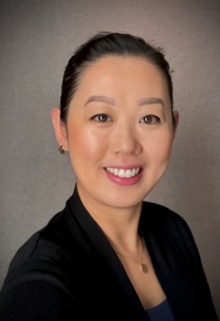
Linda P. Zhang, MD, FACS

Dr. Linda Zhang, MD, FACS, serves as a Professor and the Director of Global Surgery in the Department of Surgery at Mount Sinai Hospital in New York City. Dr. Zhang is deeply committed to global surgery, serving as the Director of Global Surgery at the Icahn School of Medicine at Mount Sinai. She also chaired the Global Affairs Committee and is a Board Member of the Society of American Gastrointestinal and Endoscopic Surgeons (SAGES). She is the Principal Investigator of a NIH/Fogarty International Grant and the recipient of the ACS/Pfizer Academic Global Surgeon Award for her significant contributions to the field of global surgery

image20

Eva Ingber

Eva Ingber is a medical student at the Icahn School of Medicine at Mount Sinai. She graduated from the University of Pennsylvania in 2023, completing the pre-med track while earning a BA in English and a Chemistry minor. She is always looking for ways to bridge the divide between writing and medicine, especially through interdisciplinary publications like NexBioHealth. Eva is passionate about global surgery and received a Global Health Research Fellowship to work with Dr. Zhang on projects for the Kyabirwa Surgery Clinic in Uganda.