
Back
SEARCH AND PRESS ENTER
Recent Posts

A Life Shaped by Emergency and Humanitarian Medicine: An Interview with Dr. Killiam Argote-Araméndiz

Interview by Sung Hwi Hong, MD, MPH
Editor of Global Health and Partnerships, NexBioHealth

From Colombia to Afghanistan and Ukraine, Dr. Killiam Argote-Araméndiz has worked where delivering care requires much more than clinical expertise. Now pursuing a Doctor of Public Health (DrPH) at Harvard, he reflects on humanitarian medicine, the people who sustain it, and learning when to leave and how to stay.

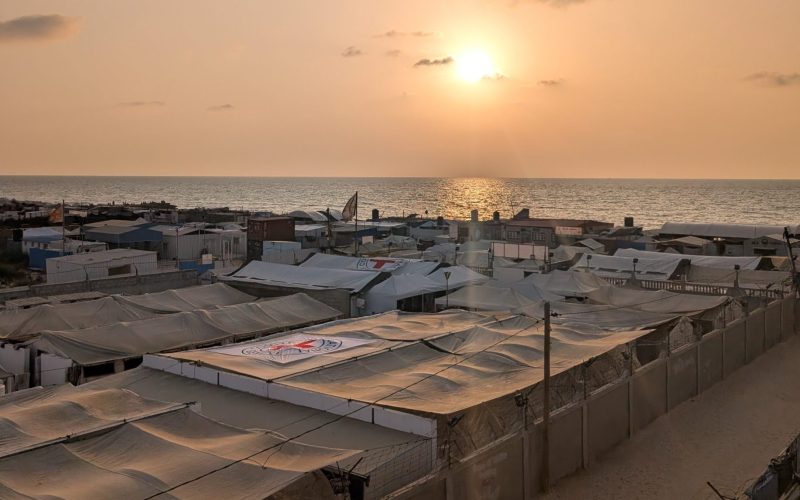
Red Cross Field Hospital, Rafah, Gaza, August 2025

1. Could you introduce yourself and tell us what drew you to emergency and humanitarian medicine?

I am a physician from Colombia, trained in emergency medicine at the Universidad de Antioquia. Before entering international humanitarian work, I led the Emergency and Trauma Unit at the Hospital Internacional de Colombia.

During medical school, I was drawn to both surgery and emergency medicine. I enjoyed working directly with patients, using my hands, and solving problems. But I have atopic dermatitis, and repeated surgical scrubbing made my skin progressively worse. It was a close decision, but the balance eventually tilted toward emergency medicine. I also needed to take care of myself.

In the emergency department, I found a place that brings together so much of the human experience: pain, uncertainty, relief, fear, and companionship. You meet people when they need help, often before anyone knows exactly what is happening. I liked the breadth of the specialty and the responsibility of making sense of that uncertainty.

During residency, I discovered disaster medicine and the possibility of helping whole populations during emergencies. In 2018, I moved to Boston for a fellowship In Disaster Medicine at Beth Israel Deaconess Medical Center and Harvard Medical School. An opportunity with the International Committee of the Red Cross followed. Over more than six years, I worked in Honduras, El Salvador, Mexico, Venezuela, Ukraine, Lebanon, Afghanistan, and Gaza.

As my responsibilities grew, I wanted to understand the political, social, and institutional circumstances surrounding the clinical work. That led to a master’s in International Humanitarian Affairs at the University of York. I am now pursuing a DrPH at Harvard, focusing on humanitarian leadership and the institutions that make effective care possible.

2. What do people who have never worked in a conflict zone most often misunderstand about humanitarian medicine?

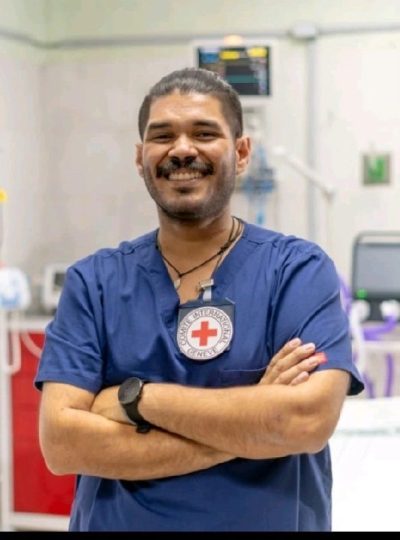
Dr. Killiam Argote-Araméndiz in the Emergency Department at Hospital Escuela, Tegucigalpa, Honduras, 2022

People see the headlines: Afghanistan, Ukraine, Gaza. What is less visible is the preparation it takes to be useful there, and the weight carried by you and the people close to you.

Clinical experience is essential, but the resources you trained with may not be available. You need to understand your strengths, recognize your limitations, and know when to seek support. Experience in one setting does not give you every answer in another.

The family who stays behind needs nerves of steel, too. They follow the news and wait for your next message. You have some understanding of your surroundings and the precautions being taken; they may have only a headline. The deployment becomes part of their lives, even though they never chose it as a profession.

Then there are the colleagues you join. They may be caring for patients while worrying about their own families and safety. I arrive knowing my presence is temporary. I will eventually leave; they will continue living with the situation.

That awareness shapes what I hope to contribute. I bring clinical experience, but also energy, companionship, and a willingness to listen. Sometimes being useful means solving a difficult clinical problem. Sometimes it means making a demanding shift more manageable for the people beside you. Both matter.

3. When you enter an emergency department, what tells you how well the system is functioning?

I look first at the people, then at how patients move through the department, and whether the team has information to understand how well care is working.

If I am receiving a shift, I start with my colleagues. How was the night? Have you eaten? Did everyone on the incoming shift make it to work? Then we review the patients, what is pending, and the supplies and resources we actually have.

When my role is to strengthen the department, I talk with people and join their rounds before proposing changes. I follow the patient’s journey: where triage happens, how quickly someone receives care, and whether they can reach surgery, a hospital bed, or another facility. I also examine the connection with prehospital teams and referral services.

One telling sign is whether the team routinely reviews waiting times, transfer delays, and outcomes—and uses that information to make decisions. At Hospital Escuela in Honduras, our triage analysis covered more than 161,000 consultations over thirty months. It helped us understand demand and patient flow.

Following patients beyond resuscitation also showed why we needed to examine what happened after initial treatment.

A department needs to recognize urgent needs and respond appropriately. It also needs to see where the process is failing and whether changes are helping in daily practice.

4. Can you describe an experience that showed why strengthening systems matters—and how you balance that work with immediate
needs?

In Lebanon in 2023, we were helping hospitals prepare for a possible escalation of hostilities in the south. We were developing procedures and training teams to receive large numbers of casualties when we learned that the Ministry of Public Health was working toward a unified national approach.

That raised a practical question: we could prepare our hospital, but how would it work with everyone else? Patients would arrive through ambulance services. Some would need surgery; others would need transfer. We had to understand what neighboring hospitals could manage and how we would coordinate.

You can know what a patient needs and still be unable to arrange it. Sometimes making treatment possible requires services and institutions to agree on how they will respond together.

Immediate needs remain urgent. But a response that depends on temporary staff, supplies, or funding may be difficult for the local system to sustain after an emergency operation ends. We need to develop it with the people who will continue the work: understand what has already been tried, what they can maintain, and what they consider most important.

We still have to make urgent decisions. We also have to keep reviewing those decisions with our partners and be willing to change arrangements that do not work over time.

5. What did Afghanistan teach you that you could not have learned inside a conventional hospital?

Afghanistan taught me to think much more about what happens before a patient reaches the emergency department. My responsibilities included first aid, prehospital care, support to emergency departments, and emergency preparedness. I had to understand how those parts of the patient’s journey connected.

Inside a hospital, my starting point is usually the patient who has arrived. In Afghanistan, I also had to ask who could help where the emergency happened, how the patient would reach a facility, and whether that facility could provide the necessary care. Improving the emergency department would address only part of the problem.

Medical logistics was another responsibility. We reviewed contingency stocks, anticipated supplies, and planned where to position them and how to deliver them. I was using clinical knowledge to prepare for patients we had not yet received.

Working with existing departments also allowed me to follow changes over time. Providing equipment or introducing a protocol was only the beginning; we needed to see whether it was useful and what still required attention. Local colleagues helped me understand both the problems and what would make a solution work.

A treatment can be straightforward medically, while making it available to the person who needs it can be much more complicated.

6. You were in Ukraine when the war escalated in February 2022. What happened?

I arrived in November 2021 and was based in Sloviansk. Almost every morning, our team drove to Bakhmut, where we were working on an emergency care pilot: an integrated emergency department model that could later be expanded nationally.

We had built a new department and were preparing its handover. My role included staff training, protocols, and coaching the senior clinicians who would lead it. We were close to putting the work into practice.

When the conflict escalated, our team had to relocate. Over several days, we organized our movement toward western Ukraine, finding routes and places to shelter as conditions changed. We were making decisions with incomplete information while worrying about what might happen next.

We never returned to the project. The hospital later stood in the middle of the battlefield. We had spent months preparing something with our colleagues and never saw it operate as intended.

Later, I participated in humanitarian operations in Mariupol, including at the Azovstal steel plant. Our interdisciplinary team observed the surrender process involving combatants leaving the plant, including compliance with obligations under international humanitarian law.

I was the team’s medical specialist and only healthcare professional. My principal responsibility was preparing for my colleagues’ medical needs: checking supplies and medications and planning evacuation routes. I also advised on medical aspects of evacuation from the plant. My role at that stage was advisory; the parties carried out the evacuation.

7. What happens when you encounter a problem that medicine alone cannot solve?

I first encountered these problems as an emergency physician in Colombia. Sometimes we knew what a patient needed and had the staff, equipment, and expertise, but insurance coverage or arrangements between the insurer and hospital became a barrier.

That creates an ethical tension. What you know you should do and what you are able or allowed to do begin to move apart. You remain responsible for the patient, but you do not control every decision affecting their care.

In humanitarian settings, the tension takes other forms. A hospital may be near the frontline, a referral route may be unsafe, or healthcare workers may themselves be at risk. You have to consider the patient’s needs alongside team safety and the consequences for other patients.

I try to understand what is preventing care, who can help change it, and what options remain. Humanitarian access, protection, coordination, and international humanitarian law became directly relevant to my
medical work.

Over time, I realized that identifying a possible solution was only part of the challenge. I also needed to understand how to bring people together and change the decisions preventing care. That is one reason I pursued further study and eventually came to Harvard.

8. How can we better care for the people who provide humanitarian care?

For international workers, support starts before deployment: appropriate selection, preparation for the context, clear responsibilities, and access to confidential physical and psychological care. During assignments, we need reasonable rotations, rest, and someone we can speak with openly.

Support must continue afterward. Returning home does not mean everything you experienced stays behind. Sometimes you only understand how much something affected you once you have left.

But local workers face different circumstances. I generally know my assignment will end and I can leave. Our local colleagues may not have that possibility. In Ukraine, restrictions under martial law can prevent male colleagues from travelling abroad. Afghan colleagues face visa and entry restrictions. In Gaza, restrictions at crossings may make leaving impossible.

Organizations still need to arrange relief from duties, practical family support, and access to care. Finishing a shift may offer little recovery when someone returns to the same insecurity.

We also need to address economic pressures, abuses of power, and whether colleagues can raise concerns without fearing consequences for their employment. If local teams are expected to assume greater responsibility, resources and decision-making authority must reach them, including support for protection, healthcare, professional development, and
rest.

For my master’s dissertation, I reviewed 60 studies and found gaps in psychosocial support and ethical and legal preparedness. Clinical training alone cannot compensate for harmful working conditions.

We should ask local workers what they need—and act on their answers, including when the problem comes from within our own organization.

9. Why was this the right time for a DrPH, and what would you like your next chapter to involve?

Humanitarian work has been fulfilling, and I want to remain involved. But I needed to change how often and how long I was away, particularly because of what deployment means for my family.

I have a wife and two daughters, now four and almost two. During deployments, my wife was caring for the girls and managing daily life while worrying about where I was. They were growing, and I was missing everyday moments. Seeing them through a screen was different from being there. I want to share more of those responsibilities and be present as a father.

My work has also given me questions I want to study more deeply. Knowing what might help does not always mean knowing how to make it work. I want to understand leadership and change within health systems, including what I need to improve in my own approach.

Harvard gives me time to reflect, learn from other perspectives, and build on field experience through research and teaching. Academia may be a path that suits me, although the exact role remains open.

I would like to improve how healthcare workers are prepared and supported for emergencies: communication, coordination, ethical decisions, mentorship, and care for themselves and their teams. I also want to understand what happens after training. Can people use what they learned? Do they have the resources? Does care improve?

I will always remain an emergency physician. What I am learning now may change how I contribute.

10. What would you tell the young physician you were before your first humanitarian mission?

I am picturing the 23-year-old Killiam who received his medical degree in Colombia in 2009.

I would tell him to buckle up. The road looks smooth now, but there are potholes and bumps you cannot see yet. At some point, the road may disappear altogether. Pay attention to where you are going, but do not spend the whole journey watching for the next bump. Look around, too. The view is amazing, and there is a lot ahead worth reaching.

Keep that curious mind, keep preparing yourself, and keep fighting for the causes that matter to you. You will face situations without all the answers, so learn from the people around you. Take time to understand them before making decisions.

Take care of your relationships. This work will give you a lot, but being away has a cost for you and the people who love you. Make time for them, for yourself, and for a life that does not always revolve around the next assignment.

And learn how to stay. Give yourself time to belong somewhere, build a community, and let people become part of your life. Learn to work through difficulties together and be present for everyday moments.

Some things need time, and you have to be there to see them grow.

image24

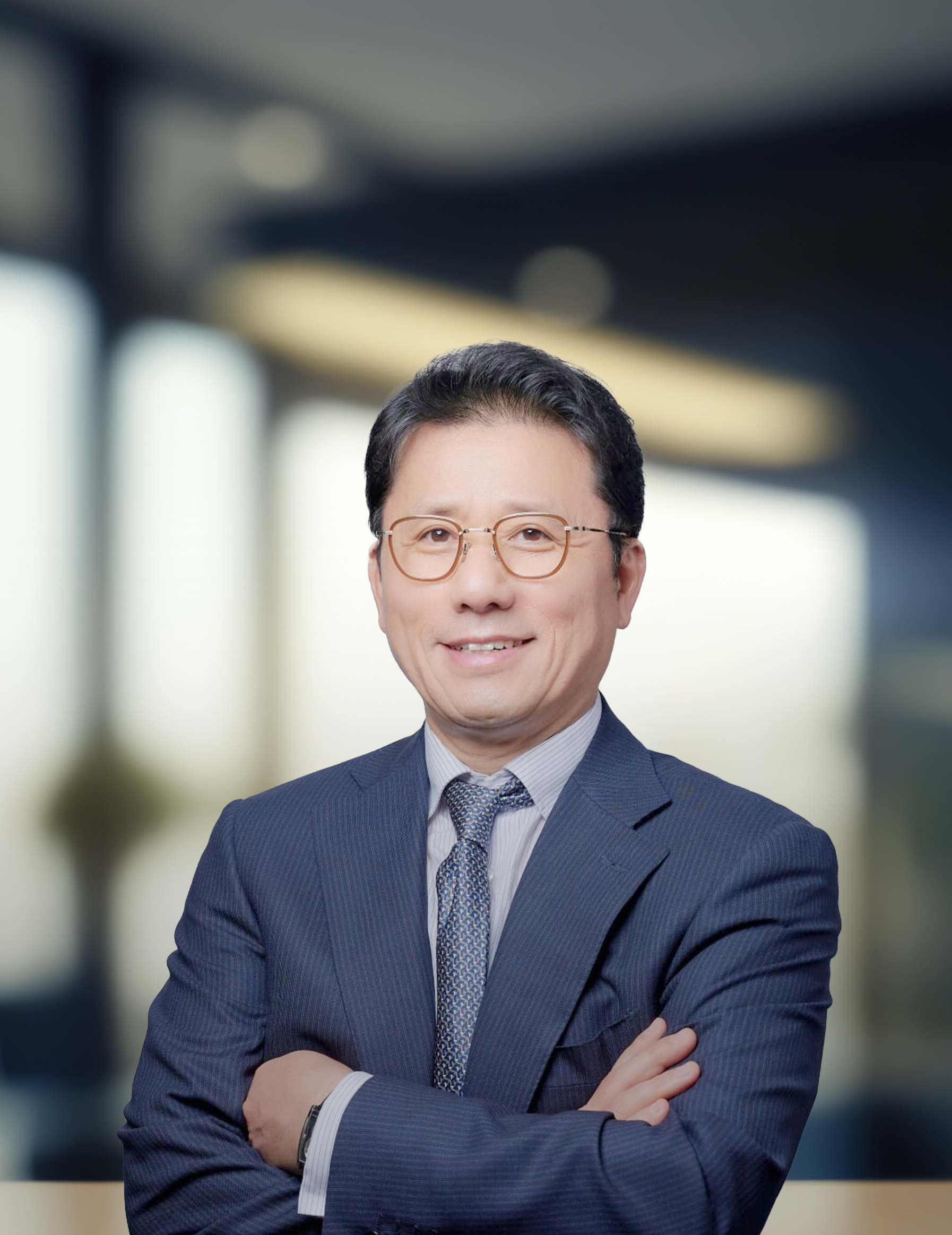
Killiam A. Argote-Araméndiz, MD, MSc

Dr. Killiam A. Argote-Araméndiz is an emergency and disaster medicine specialist with extensive experience in humanitarian settings, including Afghanistan, Gaza, Ukraine, Lebanon, Venezuela, Honduras, El Salvador, and his home country, Colombia. He holds an MSc in International Humanitarian Affairs from the University of York and is currently pursuing a Doctor of Public Health (DrPH) at the Harvard T.H. Chan School of Public Health, while collaborating with the Harvard Humanitarian Initiative (HHI) team. He serves as faculty for the Fellowship in Disaster Medicine at Beth Israel Deaconess Medical Center/Harvard Medical School and as a Board Director of the World Association for Disaster and Emergency Medicine (WADEM). His work focuses on emergency care, preparedness, disaster response, health systems, and leadership in complex humanitarian environments.