
Back
SEARCH AND PRESS ENTER
Recent Posts

From India to the World:

How Cross‑Cultural Medicine Redefined a Career

Q&A Interview with Dr. Swathy Karamchedu

from Sleep Doodles focusing on Global Health

Interview by Raveena Baskaran

RB: Looking back, what parts of your medical training in India prepared you most for the unconventional work you do today, perhaps in ways you did not expect at the time?

Dr. Karamchedu: I got into a government (public) medical school in India right out of junior college at 18. Medical training in India has evolved quite a bit since then, but during my years it meant an almost exclusive focus on clinical medicine, with very little room for anything outside of it. That was shaped by a combination of old school academic culture, the immense patient load in state funded hospitals, and the limited resources available within the public health system. The priority was always the most immediate clinical need.

So in many ways, not much of my formal clinical training directly prepared me for the kind of work I do today – as a health communicator at Sleep Doodles, a company I co-founded and my other engagements as a trainer who teaches physicians about AI in Medicine and a scientific/clinical advisor for a sleep-tech start-up. What opened that door for me was exposure to how medicine was being practiced in the West, particularly in the United States and Europe. Through occasional access to medical/science magazines and publications, I began noticing that clinicians often contributed to roles beyond the hospital, including research, public engagement, and health communications.

That made me question the very linear path we were all expected to follow as medical students, which was essentially, medical school, residency, and then clinical practice. There was no room for experimentation, especially for those of us who started right out of school at 18. So, I started stepping slightly off that path and looking for research internships, which at the time were surprisingly uncommon for medical students in India. Eventually that curiosity led me to pursue a masters in Medical Research in Sweden where I found my passion for sleep science and that was really the first time I could start imagining a way of contributing to medicine beyond clinical practice alone.

If there is one thing my medical training did give me that continues to shape my work today, it is resilience and adaptability. Training in that environment teaches you very quickly that things rarely go exactly as planned, and that setbacks are just a part of the process. Failing is never really the end of the story, it is usually just part of figuring out what comes next.


RB: It was once rare to find physicians in non‑clinical roles. What do you think has changed in the last decade to make these paths more visible and accepted?

Dr. Karamchedu:

Medicine is changing rapidly and is quickly extending beyond the hospital and the management of disease alone. We started to understand that isolating ourselves in clinical roles while new technologies, systems and ideas that were meant to transform healthcare were being developed by people with little exposure to everyday medical practice was not very efficient. That is why conversations about bridging gaps between academia, clinical practice and industry started becoming much more common. People began to recognize that healthcare works best when these spaces are not operating in isolation from each other.

More physicians have started contributing to patient health at scale by working at these intersections, in research, public health, education, technology, pharmaceuticals or communication. Industry and academia also started to realize there is value in having clinicians involved in their work and have become much more open to including medical professionals in their teams.

Areas like sleep health are a great example of this. Sleep health starts even before a clinical diagnosis with preventive health initiatives that span health education, behavioral science, workplace health initiatives, digital tools and even advocacy and policy.

Clinicians are also taking it a step further by moving into areas like health tech, consulting, finance, venture capital, and entrepreneurship where they are creating organizations and initiatives that try to address the gaps in healthcare they see on the ground. All of this was once considered “stepping away” from medicine, but today it is increasingly seen as another way of contributing to it.


RB: How do you see the global community of non‑clinical physicians evolving, especially across Asia, Europe, and the Americas, where you have worked?

Dr. Karamchedu:

The biggest change I notice is visibility and the ease of networking to create a community.

When I was looking for inspiration and advice to make this lateral move during the final years of my medical training, I had almost no examples to look to in my part of the world. Europe and the Americas were already evolving at that point, but those places felt like distant ideals we could not yet reach. Even the few clinicians who were exploring non-clinical roles where I was training in India were doing it in isolation, without much support from their institutions.

That is very different today. There is now a large global network of clinicals working across different industries who openly share their experiences and help show what these unconventional careers can look like across different countries.

These pathways have existed in North America and Europe for longer with institutional support. In many parts of Asia, the shift is newer and you still have to carve your own path. I’m back in India right now and catch myself explaining what I do to people often and have received a fair share of confused looks. But that is not to say the change is slow, the pace of adoption is quick especially as more technology becomes integrated into healthcare systems across Asia.

I was recently invited to join a popular podcast for the medical community in India that focuses on helping physicians discover non-clinical careers. I couldn’t help thinking to myself how much I would have loved having a resource like that when I was in my own exploration phase.


RB: You have worked across India, Sweden, Singapore, and the US. How has cross‑cultural exposure shaped your understanding of global health challenges?

Dr. Karamchedu:

No matter where you are in the world, the one thing that ties healthcare across countries and cultures is that people come to you at the most vulnerable moments of their lives, and healthcare systems aim to provide the best care within the constraints of their resources.

The systems themselves are widely different in the parts of the world I had the privilege to live in. Sweden has predominantly publicly funded healthcare, Singapore has a highly subsidized public healthcare model and on the other end of the spectrum is the US with a mostly privatized healthcare system. India sits somewhere in the middle with both public and private healthcare offerings.

Each of the systems has its advantages and pitfalls and seeing them up close makes you realize that there is rarely a single correct way to solve a healthcare problem. At their core, the problems they are trying to solve are very similar, with access to care, prevention strategies, improving health literacy and adapting to rapidly changing lifestyles and technologies at their core.

What it made me realize is that healthcare challenges are not isolated national issues but more shared global problems that require collaboration. This was made very clear during the COVID-19 pandemic. If we took time to learn from different systems around the world we would probably find better solutions for our problems back home.


RB: What do you think global health organizations need to keep in mind when designing interventions for diverse communities?

Dr. Karamchedu:

Global health organizations occupy a unique place in healthcare because they have to step into the realities of the communities they serve. That means they not only have to look at a problem from a clinical perspective but also with the mindset of an anthropologist, a public health specialist and sometimes even a diplomat.

Solutions cannot be purely top down as they often are in traditional healthcare structures. They need to be bottom up, rooted in and aligned with a community’s cultural beliefs, social structures and constraints. In the case of sleep health interventions, this includes their daily routines. If these are not factored in, even the most well-intentioned interventions may fail. Something that works well in one setting may not translate easily into another.

This is something we try to put into practice in our work at Sleep Doodles. The biological need for sleep is universal, but a society’s relationship to sleep is shaped by culture, work demands, social expectations, climate and importantly structural barriers to accessing a good night’s rest, such as poverty, lack of safe, stable housing, noise, air or light pollution, and even discrimination.

When we design our workshops and other educational resources, we are very mindful of the audience we are trying to reach. Even within low-resource settings, not all challenges and forms of suffering are homogenous. Different groups within the same community often face very different barriers. In addition to tailoring solutions to each group’s circumstances and needs, we also make an effort to understand where their questions and concerns lie before designing our sessions.

For in person sessions, we try to understand the demographic of the attending audience, review sleep patterns collected over a period of time before the session and identify the main concerns participants have about their sleep. When creating educational material such as picture books, posters, or infographics, we focus on making the information accessible and the solutions implementable regardless of resources.

Ultimately, the most effective global health interventions are found at the intersection of scientific evidence and local insight. Listening carefully to the communities you are designing for takes priority if we want to create lasting impact.

image18

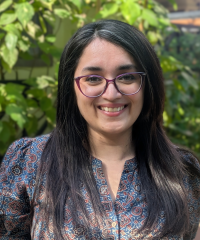
Dr. Swathy Karamchedu

Swathy Karamchedu is a physician and health communicator working at the intersection of health, technology, and grassroots impact. She is the Co-founder of Sleep Doodles, where she builds scalable community-centered and community-led sleep and wellbeing programs, and Head of Sleep Science at Naptick, guiding evidence-based consumer sleep-tech solutions. Alongside this, she leads AI upskilling workshops for physicians across 15+ cities in India, advocating for the ethical use of new technologies. Her work focuses on translating science into practical, accessible knowledge for diverse populations.