
Back
SEARCH AND PRESS ENTER
Recent Posts

The Fallacy of Resilience in a Global Health Context:

Transitioning from Outcome Measures to Systematic Change

By Patrisha C. Lazatin, MD, MMSc

Dr. Mahmud Bah is resilient. He had to be. Born in Freetown, Sierra Leone, a country with 8 million people and 0 neurosurgeons, Dr. Bah had to find alternative solutions to getting care for his patients. I had the privilege of working with him in the summer of 2024, when I was conducting systems-based implementation science research in Sierra Leone. We were focused on trying to figure out exactly how we can set up a neurosurgery service in Connaught, the only public hospital in Freetown. Mahmud was a medical student back then, who dreams of becoming a neurosurgeon, inspired by the tale of his late friend, a newly trained anesthesiologist who died from traumatic brain injury. His death could have been prevented by a decompressive craniectomy. But there were no neurosurgeons. There was no one who could have saved him.

At this current time of writing, Sierra Leone’s first neurosurgeon is already back in the country after years of specialty training. Dr. Alieu Kamara spent 5 years in Rabat, Morocco for residency training. He was sponsored by a charitable organization, Mission:Brain, that aims to develop neurosurgery in places where there is no neurosurgery to speak of.

This mission is in stark contrast with the common theme underlying most global health missions – we must be resilient in the face of adversity. We must learn how to make do with what we have. We celebrate hardship, and reward struggles. After all, that is what we envision global health to be. Global health is hard, back breaking work. It utilizes whatever limited resource is available. This is what I would label the fallacy of resilience. We celebrated so many of our colleagues in the global health field who made do with what they had, who tried to do things in places that could not by stretching what little they had.

The issue with using and capitalizing on resilience is that the programs we design naturally become outcome based. For instance, in the case of Sierra Leone, the first instinct was to send international help, have volunteer neurosurgeons come in and do surgery in Sierra Leone.

It would seem like a straightforward, easy, doable solution. The volunteers and the people of Sierra Leone being resilient against adversity and trying to do what they can with what little they have. Outcomes become did we manage to save one life. So yes, your short volunteer program may have worked. Yes, of course, you saved one life.

For how long can they sustain it? How long will each volunteer surgeon be able to take time off their own work commitments before going back? For how long can funding be provided? How can neurosurgery be done when there is no operating theater or equipment? Do we just keep bringing our own each time we come to volunteer? How about long-term care? Who is going to follow up on post-operative wounds, inevitable complications, and post-operative progress? What about rehabilitation?

Here lies the problem with resilience. We cannot expect long lasting change when we just ask people to be resilient, to continue working despite no resources, to be creative and find ways to make do. I find that in the face of adversity, sometimes, the best thing to do is to think “how can I get rid of adversity?” instead of thinking “how can I make it through and be resilient despite adversity?”.

There is this wonderful awakening amongst global health practitioners, who come to the field and see that there are no specialty operating rooms, there are no microscopes, there are no CT scanners, and think – how do we fix this? Global health has since evolved from wondering “how can I do neurosurgery in a place with no operating room” to “how can I build an operating room so that I can do neurosurgery.”

In the case of Connaught, the solution was not to send volunteer neurosurgeons, the solution was to train Sierra Leonians to be neurosurgeons for their countries. Instead of volunteer missions, the focus became raising enough funds to send a doctor for neurosurgery specialty training to a nearby training center outside of Sierra Leone. In addition, the hospital facilities were also evaluated. Nurses were trained to be neuroscience nurses. Specialty equipment like drills, microsurgery tools, microscopes and even a CT Scan was brought in to Connaught. The ICU was outfitted with an oxygen pipeline, so we can use donated ventilator machines. Change was made. We did not ask Sierra Leonians to be resilient. We asked them what can we provide to make this happen?

To this day Sierra Leone has had its first brain surgery, first spine surgery, and patients who obtain traumatic brain injury now have a chance for recovery and survival. Mahmud, who now completed his exams and is a fully fledged doctor, no longer believes he has to make do with what he has. He can now actually get the proper training that he needs. These are more than just outcomes on paper, a statistic in a journal. These are actual systematic changes, made because we refused to be resilient, we refused to make do. We saw what was missing and aimed to fill in the gaps.

This is the future of global health. This is how we repair the world, as was envisioned by the late Dr. Paul Farmer. “With rare exceptions, all of your most important achievements on this planet will come from working with others—or, in a word, partnership.” Capacity building and implementation science is the way of global health collaboration. We come into their communities not to simply lend help, but to empower communities, to ask them what they need, instead of what we think they need, and to build up to those needs, to fill in their gaps and continue to collaborate with their communities. There is never an end goal, or a target date of handover. These are forever, our partner communities. We practice global health not by fulfilling outcomes of “number of surgeries performed”, but by saying “now neurosurgery can actually be performed, in an ideal environment.”

Do not be resilient. Refuse to accept adversity. Refuse the expectation to thrive in a situation that provides no assistance, no resources, no possibility. The practice of global health must be rooted in equity, in the belief that if the gold standard of treatment is X, then everybody must have X. We must move away from the notion that global health must operate in a way that leverages on how Y can approximate X to the best of our abilities.

Radical, all encompassing, systemic change that improves not just outcomes but communities, should be the goal of global health. We did not just make decompressive craniectomy possible, in fact that was never the goal. There was never a number or a statistic we wanted to achieve. There were people, like Mahmud, who we wanted to succeed. To achieve their fullest potential to the best of their ability, unrestrained by something so menial as lack of resources.

This is a call for all global health practitioners. Refuse to be resilient. Ask for change. Ask for it loudly. Ask for it proudly. This is how we practice global health. This is how we change the world.

Editorial Review

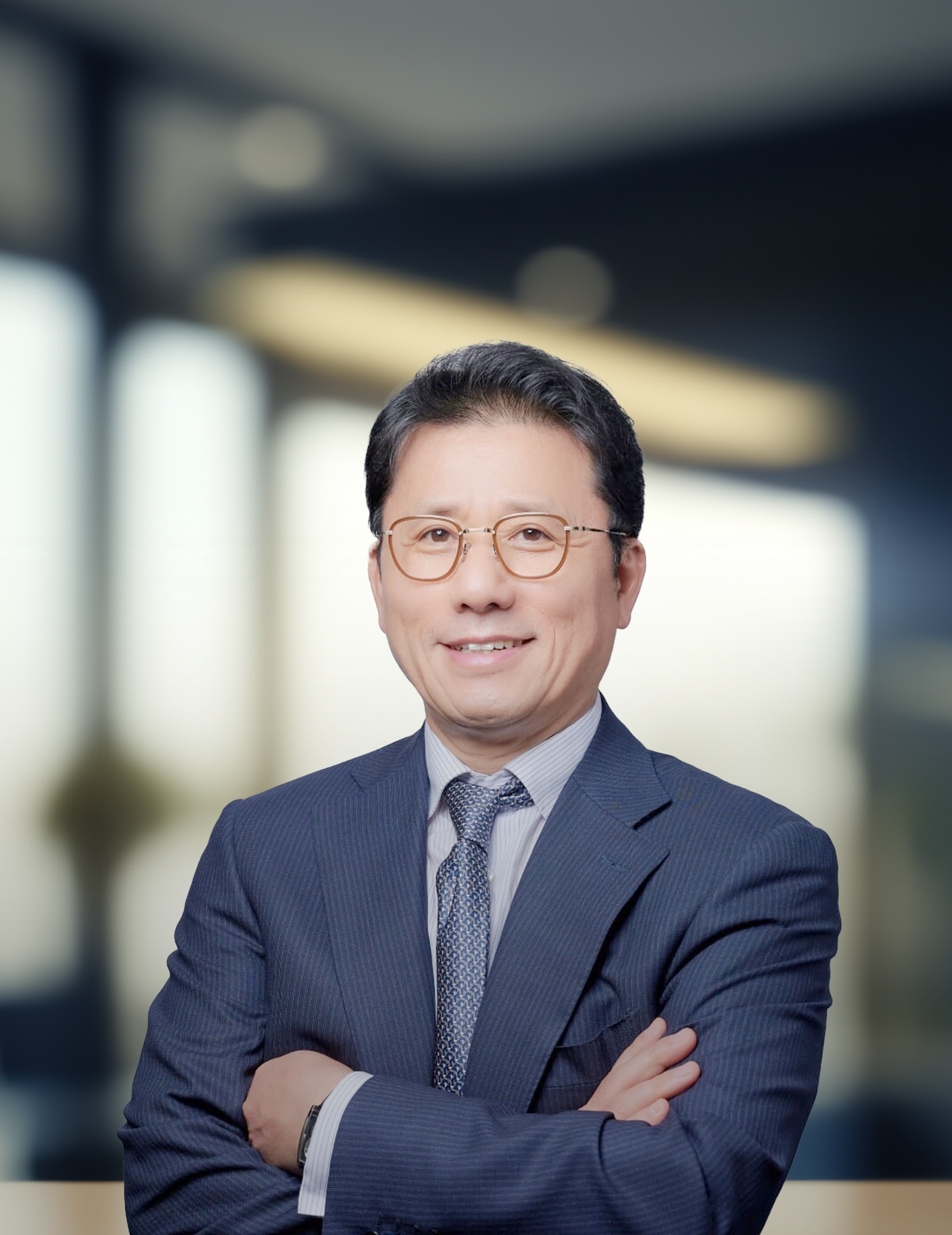
By Sanghyun Alexander Kim

Dr. Lazatin’s essay, “The Fallacy of Resilience in a Global Health Context: Transitioning from Outcome Measures to Systematic Change,” offers a thoughtful and timely reflection on the evolving philosophy of global health. The article challenges the traditional narrative that celebrates resilience in resource-limited settings and instead calls for structural change and long-term system building. For students entering global health today, this perspective is both meaningful and necessary.

The story of Sierra Leone’s first neurosurgeon and the effort to build neurosurgical capacity at Connaught Hospital illustrates a critical shift in global health thinking. Rather than measuring success by the number of surgeries performed during short volunteer missions, the article argues that real progress comes from building sustainable systems through training, infrastructure, and institutional development.

As someone who has participated in international medical outreach for more than a decade, this message resonates deeply with my own experience. For many years I joined surgical mission trips through churches and humanitarian organizations. These trips were meaningful and helped many patients, but they also revealed the limitations of short-term surgical missions.

Two years ago, I had the opportunity to visit Kyabirwa Surgical Center in Jinja, Uganda, an experience that significantly reshaped my own perspective on global health outreach. The center is a purposefully designed ambulatory and short-stay surgical hospital built in a rural setting, intended from the beginning to be operated and run entirely by Ugandans. From the surgeons and administrators to the nurses, cooks, and support staff, the entire system is locally led.

This remarkable surgical facility—located quite literally in the middle of the jungle—was built by one of my mentors at Mount Sinai. He has never sought the spotlight for this work. For more than fifteen years, he has quietly continued to connect physicians and surgeons from abroad with Ugandan colleagues to support the growth of their local surgical capacity.

During my visit, my role was not to perform surgery but to teach and collaborate. Since then, our partnership has continued through regular Zoom conferences where we discuss complex cases, operative strategies, and treatment planning. At times I am able to observe procedures remotely and offer input. The goal is not to count the number of operations performed by visiting surgeons, but to support the continued growth of a surgical system that serves its own community.

Having experienced this transformation firsthand—from mission-based service to long-term partnership—I believe Dr. Lazatin’s article captures an important truth about the future of global health. Sustainable progress comes not from episodic acts of resilience, but from training, infrastructure, and enduring collaboration.

For our Student Hub readers, this essay offers an important lesson. The future of global health will not be defined by how many surgeries we perform abroad, but by how effectively we help build systems that allow local physicians and healthcare workers to care for their own communities.

For that reason, this article is a meaningful and thought-provoking contribution to the broader conversation on how we should approach global health in the years ahead.

image31

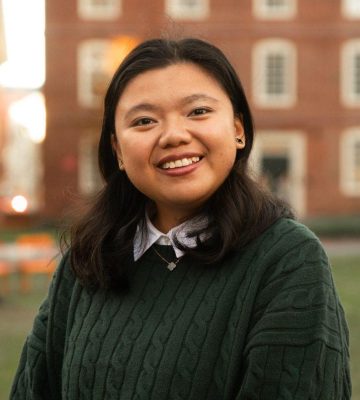
Patrisha C. Lazatin, MD, MMSc

Medical Officer, Department of Neurosurgery
National Neuroscience Institute – Singapore

Pat Lazatin is an aspiring neurosurgeon and global health advocate. She completed her medical degree from Duke University-National University of Singapore Medical School in 2020. After three years of clinical practice, inspired by the works of Paul Farmer, she decided to pursue a master’s in global health delivery at Harvard Medical School. During her time in Harvard, she served as the Outreach Chair for the Sierra Leone Project under HMS Mission:Brain. She is currently serving as a resident physician under the Department of Neurosurgery in Singapore General Hospital. Her vision of equitable healthcare for migrant workers in Singapore remain her focus. Outside of her healthcare pursuits, Pat is often found simply walking to Mordor, or meditating in Dagobah. (That is to say, in her free time, Pat likes to browse through a bookstore and spend her day in a coffeeshop, transported to a fantasy land where equity is a given, not a demand).