
Back
SEARCH AND PRESS ENTER
Recent Posts

A Promise That Became a Blueprint: Building a Community-Based Model of Care in Kenya

By Jess Danforth, MPH

Editor’s Note

Jess Danforth’s account of The Leo Project is a beautiful, painful, and deeply hopeful story about what can grow from friendship, loss, and a promise kept. The death of her friend Caitlin O’Hara, and Danforth’s own experience with cancer, gave rise to an ambitious vision for healthcare in rural Kenya. Yet the most striking part of this story is not ambition alone. It is the decision to begin by listening.

Before building a clinic or designing programs, Danforth and her team listened to mothers, elders, traditional birth companions, community health workers, and local leaders. They learned that the barriers to better health were not only medical. They were also rooted in trust, distance, information, family decision making, and whether people believed the health system would be there when they needed it. The Caitlin O’Hara Community Health Clinic emerged from those conversations as a place where care is shaped with the community it serves.

In our previous issue, Dr. Peter Smith of Outreach EMR explored a related challenge in global healthcare: the absence of reliable medical records in many low resource settings. His work has shown the importance of practical digital systems that preserve patient histories, support clinical decisions, improve follow up, and allow health teams to recognize patterns that might otherwise remain invisible.

Jess Danforth’s work adds another essential dimension to that conversation. Data can tell a clinic what is happening. Trust and local partnership help ensure that people seek care early enough for it to make a difference. At The Leo Project, clinical information is used alongside community education and local leadership to strengthen maternal care, mental health support, chronic disease management, and preventive care.

This is especially relevant to our readers, many of whom are working to advance health through clinical innovation, research, technology, advocacy, and policy. The stories of Dr. Smith and Jess Danforth remind us that lasting progress rarely comes from one solution alone. It depends on systems that are practical, responsive, and rooted in the lives of the people they are intended to serve.

We would be glad to hear from readers whose work, experience, or questions connect with the ideas in this story. If you are building more equitable, community-centered health systems, exploring the role of data and technology in care, or have a perspective you would like to share with our readers, please contact the NexBioHealth editorial team at nexushealthhubed@gmail.com.

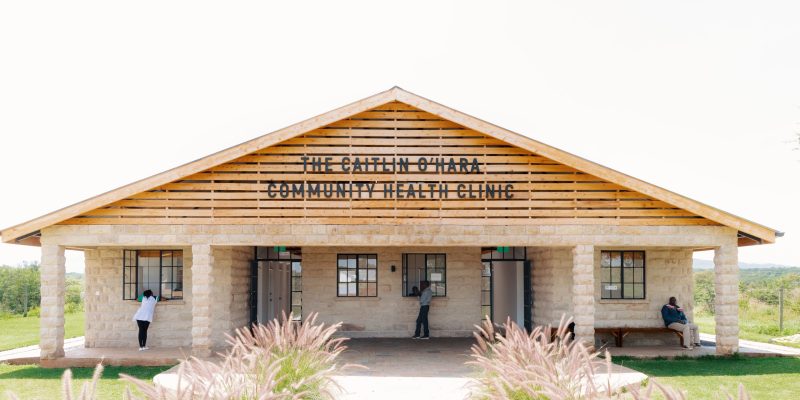
The Caitlin O'Hara Community Health Clinic, Laikipia County, Kenya

Caitlin O’Hara was a year ahead of me at our New England prep school, a place where animal heads hung on the walnut walls of the dining halls and we wore lacrosse kilts to class on Saturday mornings. She knew everything about English literature, spoke French, and played varsity squash. When I was sixteen, at a Dave Matthews concert, she told me she had cystic fibrosis. I had no idea what that was.

At Caitlin’s twenty-first birthday party, under a tent in her parents’ backyard, her mother cried because the doctors didn’t think she would live past twenty. But Caitlin played squash, she went to George Washington University, lived in Paris, worked at a gallery, and started a belt company. Every so often she vanished for a course of IV antibiotics delivered through a PICC line, but she always came back.

A lung transplant was on the horizon for most of her adult life. Because of a Burkholderia cepacia infection, no hospital in Boston would take her case; the risk was too great. When UPMC finally listed her, she uprooted herself to Pittsburgh and moved into an apartment with her boyfriend and her parents, chosen mostly for how easily it accommodated the tubing that tethered her to 24/7 oxygen.

She was thirty-two and I was thirty-one. All of our friends were getting married and having babies. She was waiting for lungs when I was diagnosed with stage three breast cancer.

Everything after that happened quickly and all at once: chemotherapy, thirteen surgeries, radiation, a series of clinical trials. In the middle of it all, Caitlin got very sick and was placed on life support. I flew to Pittsburgh to be with her when she received new lungs, perfect lungs, as it turned out. But her body had been through too much. She didn’t make it. Before she died, we had made each other a promise: if something happened to either of us, the other would start something in the other’s honor.

Listening first

In 2018, from a hospital bed at UCSF, I started The Leo Project in Caitlin’s memory. It began as a GoFundMe. In Swahili, Leo means today, and being an astrological Leo was part of what defined Caitlin; she loved her late July birthday.

When my doctors finally permitted me to travel, I flew to Kenya for two weeks and bought an acre of land in Nanyuki, three hours north of the capital city at the base of Mt. Kenya. When I was able to return, I spent the first months doing nothing more strategic than listening: to community leaders, to mothers, to health workers, to anyone willing to talk to me.

One theme kept coming back. People in Laikipia County were not dying of rare diseases. They were dying of a lack of access.

My first instinct was to build something in the spirit of Paul Farmer’s integrated model, one that met the educational, psychosocial, and medical needs of a community at once. But this was a region whose residents had long felt marginalized by the health system, and our early outreach was met with skepticism, which was entirely reasonable. Before we could provide care, we had to earn trust.

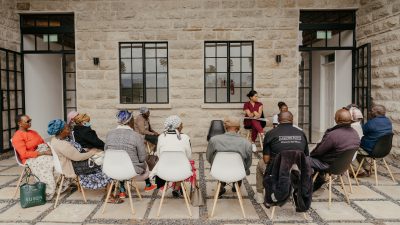
So we held listening sessions with local elders, traditional birth companions, and community health workers, not to prescribe solutions but to learn what they themselves considered the priorities. We hired locally. We set up a community advisory committee to guide our decisions and to hold us accountable. And we worked with Kenya’s Ministry of Health (MoH) to align with sub-county, county, and national policy, so that we would be strengthening the existing system rather than building a parallel one.

The Clinic

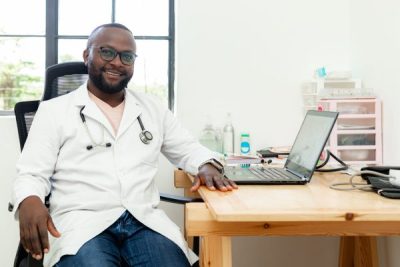
John Ndegwa, TLP’s resident Clinical Officer

The clinic began as a tiny pencil sketch on a legal pad. I took the idea to Build Health International, who agreed to take us on as a client, their smallest yet. On August 23, 2023, we opened the doors of The Caitlin O’Hara Community Health Clinic.

Today, with a team of fewer than twenty, we see approximately one hundred patients a day. Our direct catchment area is roughly 50,000 people, within a broader Laikipia County population of more than 560,000, many of whom previously had no reliable care. The Ministry of Health has designated the clinic as a Center of Excellence.

But the number I find most telling is not a headcount. Once the community trusted us, the clinic stopped being an outside intervention and became theirs. Women began completing up to eight antenatal visits, an unprecedented number in Kenya. Vaccination rates rose. Antibiotic misuse
declined. People began seeking preventive care, which requires a particular kind of trust: that the system will be there when you need it.

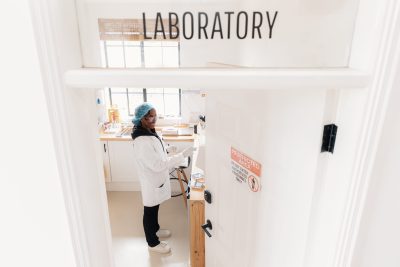
The Caitlin O’Hara Community Health Clinic Laboratory

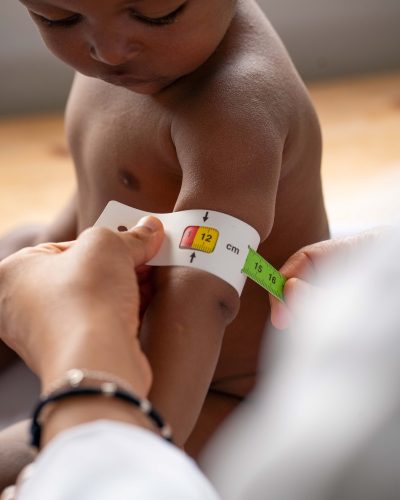
The clinic provides comprehensive primary care, including maternal, newborn, and child health services, mental health services, HIV testing and counseling, nutrition support, management of non-communicable diseases, a point-of-care ultrasound, laboratory diagnostics, and a pharmacy. Underneath it all runs a proprietary electronic medical records system that captures clinical and population health data in real time. It lets us see emerging needs as they appear, measure what is working, and change course when something isn’t.

Since opening, we have provided more than 33,000 patient visits.

Three families

Numbers can describe a health system, but they cannot describe what it is like to be inside one.

When Eustine went into labor, she did something she had never done: she went to the hospital. Like most women in her community of Soit Narok, in rural Laikipia, she had always delivered at home. This time was different. Eustine had joined The Leo Project’s group antenatal program. Her husband, Peter, had completed our program for fathers. Her mother-in-law, Grace, had trained with us as a Traditional Birth Companion. When Eustine’s labor turned difficult, it was Grace who recognized the danger signs and insisted she seek care. The family had already saved money for the
delivery, something Peter began doing after the course he took. Eustine gave birth to a healthy girl by cesarean section.

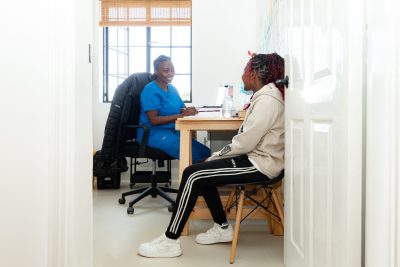
Maternal Child Health Clinic, Alice with one of her patients

That story is how we think about maternal health. A pregnant woman is often not the person deciding whether she delivers at a facility. So we work with her husband, and we train the birth companions her family already trusts.

Rose was one of the first participants in our Mental Health for Mothers course. She had never received any mental health support during pregnancy. After hearing about the program from Shadrack, our Community Liaison, she decided to come. She learned practical tools, like meditation and breathing techniques, for managing the stress and uncertainty that accompanies pregnancy. She also formed a bond with Alice, our lead maternal, newborn, and child health nurse, who teaches the course alongside providing routine antenatal and postnatal care. “She has become a friend to me,” Rose told us, “and I’m really grateful.” Mental health, in her case, was not a separate service. It was part of being cared for.

John lost his eyesight temporarily and without warning. Frightened, he learned that he had diabetes. He was referred to our Monthly Diabetic Clinic, where a nutritionist taught him what to eat and what to avoid, small changes that gave him back a sense of control. The group he joined gave him
something else. “During our classes, everyone shares their experiences,” he said. “Listening to others made me realize I wasn’t the only one facing these challenges.” And then: “Diabetes changed my life, but this clinic taught me that I don’t have to face it alone.”

Monthly Diabetic Clinic

For nearly five years, Salat struggled to breathe, enduring repeated misdiagnoses of pneumonia and unnecessary antibiotic prescriptions. His attacks were so severe that his children would stay awake at night, afraid for his life. When he came to The Caitlin O’Hara Community Health Clinic, he
was nebulized for the first time and finally diagnosed with asthma. With a proper diagnosis and an inhaler, Salat has regained his strength and no longer experiences severe attacks. Today, he has stable work and is grateful to be independent again. “The fact that I can wake up and work with my own two hands is the best feeling I have had in the longest time.”

Eustine, Rose, John, and Salat’s stories show what it takes to keep a community healthy. Sometimes it starts in the exam room, with an accurate diagnosis and the right medication. Just as often, it depends on what happens beyond the exam room. While medicine does its work at the clinic, health is maintained in the families and communities where patients
live.

A feedback loop

Nutrition Clinic

That understanding shapes the community-based health education programs we offer alongside clinical care. We offer perinatal mental health education for mothers and fathers; training for Traditional Birth Companions; mental health education for primary school students and teachers; sexual and reproductive health education for primary and
secondary school students; and a Community Mental Health Literacy course for community leaders.

The design is deliberate. Clinical services generate insights that inform community interventions. Trained community members improve prevention, early detection, and timely referral, which sends patients back to the clinic sooner and in better shape. Data connects the two. The result is a loop rather than a pipeline, and we have come to believe that this is what a resilient rural health system looks like.

What the data say

Mental health has become central to this model. We have provided nearly 2,300 counseling sessions and run a psychiatric clinic twice a month. Sixty-three people, among them police officers, religious leaders, teachers, and health workers, have graduated from our Community Mental Health Literacy course and returned to their communities able to support people who are struggling.

In 2025, we built mental health directly into maternal care. Every pregnant and postpartum woman we see is screened with the Edinburgh Postnatal Depression Scale. Of more than 330 women screened, 30 percent were identified as at risk for perinatal depression, and 7 percent reported thoughts of self-harm. Those findings prompted us to create programs for mothers and for fathers. Every woman in our first maternal cohort finished the course knowing where to turn for help, compared with only half before it. Among fathers, 70 percent reported better emotional regulation. In a predominantly Maasai community, where men rarely discuss emotions and patriarchal norms shape the wellbeing of women during pregnancy, that is not a small thing.

What comes next

The work has taught me what stands behind poor health outcomes: unreliable data systems, workforce shortages, inconsistent policy implementation, gaps in supply chains, and corruption. These lessons, along with a comprehensive needs assessment, are shaping our next phase, an inpatient hospital focused on maternal, newborn, and child health, and oncology care.

I think of what we have built as a blueprint for a scalable, data-driven model that shows what is possible when clinical care, community education, and evidence are designed to work together. In July, I began the Doctor of Public Health program at Harvard, where I hope to test and refine that blueprint and, with time, share it widely.

Before all of this, before Caitlin died, before I got cancer, I worked in tech startups and finance—as an associate at Fidelity, an analyst at a Boston venture capital firm, and at a technology startup in San Francisco. I never imagined I would end up here. But when I think about Caitlin, who spent her life being told what she couldn’t do and then did it anyway, a promise kept in a place she never saw does not seem so improbable. It seems like exactly the kind of thing she would have had a plan for.

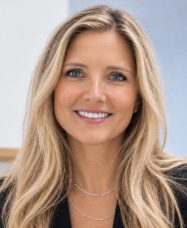
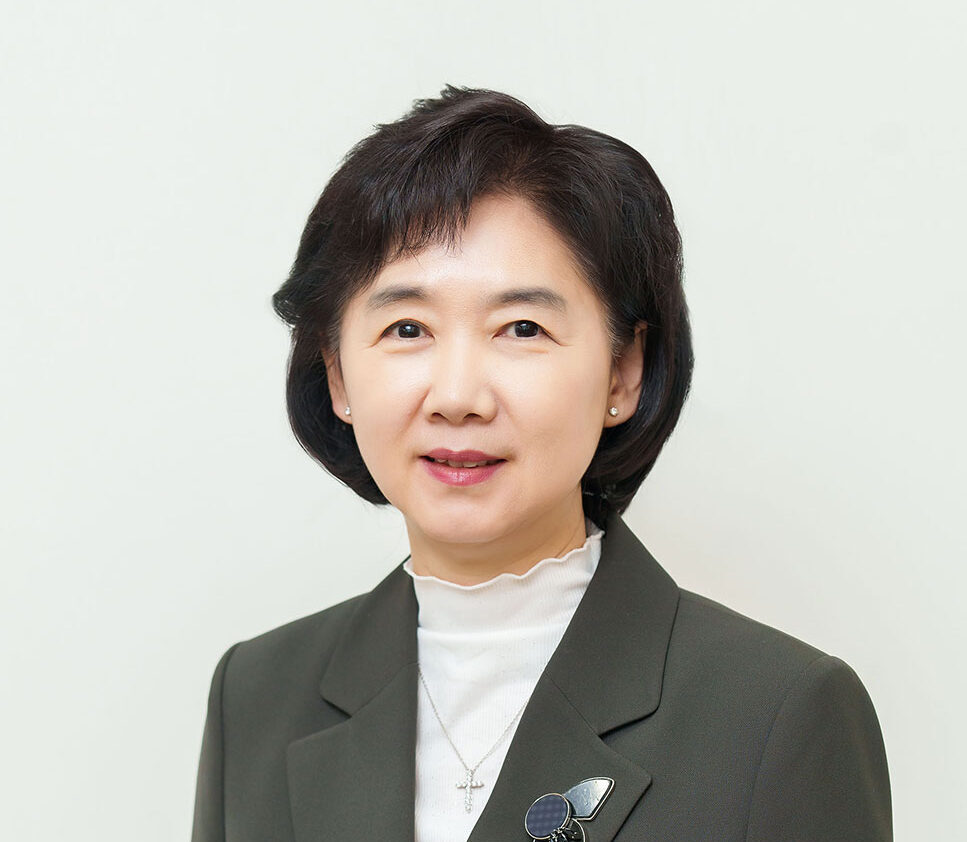
Jess Danforth_Headshot

Jess Danforth, MPH

Founder and Executive Director,
The Leo Project

Jess Danforth is a Doctor of Public Health (DrPH) candidate at Harvard T.H. Chan School of Public Health and the Founder and Executive Director of The Leo Project, a nonprofit organization dedicated to advancing equitable access to healthcare in rural Kenya.

Jess founded the organization in 2020 in honor of her best friend, Caitlin O’Hara. What began as a GoFundMe campaign launched from a hospital bed during her own cancer treatment has evolved into an organization operating a fully licensed outpatient medical clinic. Recognized as a Center of Excellence by Kenya’s Ministry of Health, the clinic as serving a broader catchment population of more than 560,000 people who lack reliable access to healthcare. She is currently leading the development of an inpatient hospital focused on maternal, newborn, child health, and oncology care — the first facility of its kind in the region.

Originally from Boston, Massachusetts, Jess earned her MPH from Harvard T.H. Chan School of Public Health in 2025 and holds a BA from Boston College. Prior to her work in global health, she held positions in venture capital, financial services, and the technology sector, including roles at Fidelity Investments, a Boston-based venture capital firm, and a technology startup in San Francisco. Her professional interests center on health systems strengthening, oncology, maternal and child health, and the role of health data infrastructure in improving outcomes across resource-constrained settings.

Leave Your Comment