




Back
SEARCH AND PRESS ENTER
Recent Posts

From Neglected to Noticed: Bringing Tropical Diseases Back into Focus

By Juan Carlos Anguiano, MD, MPH

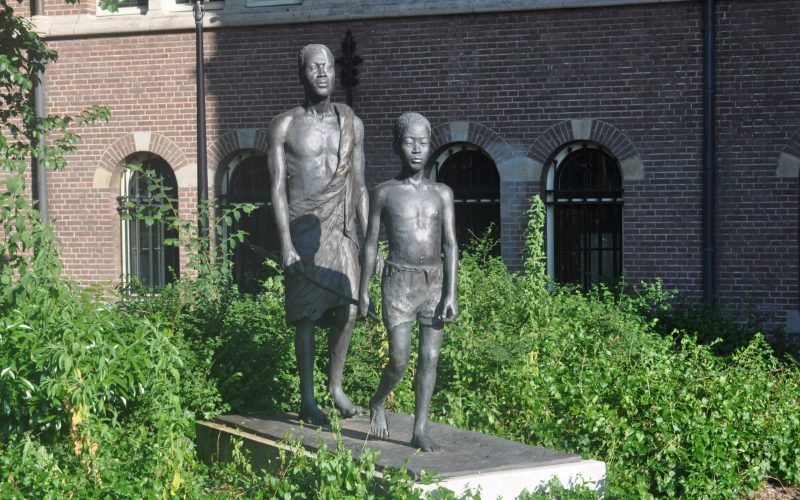
Author: Brbbl, CC BY-SA 3.0

For those who have had the privilege to visit the World Health Organization headquarters in Geneva, Switzerland, there is a beautifully striking bronze sculpture titled “Sightless Among Miracles.” It depicts a young boy guiding an older man who has lost his sight to “river blindness,” or onchocerciasis. The sculpture is a reminder not only of the devastating consequences of this neglected tropical disease, but also of the global efforts undertaken to control and eliminate it.

For centuries, infectious and parasitic diseases, many of which are now in the field of tropical medicine and disproportionately affect tropical and subtropical regions, represented a major public health burden around the world, long before the field of tropical medicine or even public health efforts had a name.

However, as living conditions improved and science advanced, the burden of many infectious diseases gradually declined in many parts of the world. In contrast, chronic diseases became increasingly prominent in what we call the epidemiological transition. As attention shifted toward other health priorities, many tropical diseases received less attention from health systems including healthcare institutions, the pharmaceutical industry, and medical schools. Eventually, the term “neglected tropical diseases” (NTDs) became widely used to describe a group of preventable and treatable conditions that primarily affect marginalized populations living in poverty.

Despite the limited attention and restricted resources dedicated to many of these diseases, NTDs remain an important public health problem, particularly in low- and middle-income countries. Today, NTDs still affect approximately one billion people worldwide, and Mexico is no exception. Climate, living conditions, and limited access to healthcare services continue to create conditions in which these diseases can persist.

I still remember the first time I heard about this epidemiological transition. Something about it resonated with me, and putting efforts into eliminating these diseases in my country made complete sense. It was precisely my interest in this epidemiological transition, and my willingness to improve living conditions, that led me to focus on this field. For countries like mine, NTDs are not diseases from the past. They are part of everyday public health practice.

My name is Juan Carlos Anguiano. I am a physician from Mexico. I specialized in Preventive Medicine and Public Health and obtained a Master’s in Public Health and Health Services Administration from the National Institute of Public Health of Mexico. For the past few years, I worked as a community health specialist and epidemiologist for the Mexican Social Security Institute, Mexico’s largest public healthcare institution.

During my years as a clinician, I realized that many of the cases encountered by epidemiologists in my country are related to tropical and vector-borne diseases, as well as other conditions that disproportionately affect low- and middle-income countries. Dengue, for example, is so common in Jalisco that I doubt there is a single licensed physician in the state who does not know how to diagnose and manage non-severe dengue.

However, Mexico also has patients affected by other diseases that, despite continuing to generate an important burden in the country, remain less familiar to many physicians. Diseases such as Chagas disease, tuberculosis, and rickettsiosis may be underdiagnosed because of limited diagnostic capacity, lower clinical awareness, and unequal access to specialized healthcare services.

There are patients I simply cannot forget, sometimes because they teach me something about life itself. I still remember a six-year-old boy who was brought to my office one day and whom I diagnosed with scabies. The disease itself was interesting to me, but what really caught my attention was that his family lived only about five blocks from the clinic, in the downtown area of a major metropolitan city. Yet they were still affected by a disease closely associated with poverty and inadequate sanitation.

It was precisely my interest in improving those living conditions that, after working for a couple of years, led me to pursue a Professional Diploma in Tropical Medicine and Health at Nagasaki University in Japan, in collaboration with San Lazaro Hospital in the Philippines.

During this experience, I was able to study these diseases in much greater detail, hear from tropical medicine specialists, and share my own thoughts with physicians all over the world. At the same time, my background in public health and preventive medicine allowed me to focus not only on treatment, but also on what is needed to prevent these diseases and improve patients’ quality of life.

During my time in the Philippines, I experienced again the same nature of NTDs, having the opportunity to diagnose and treat patients with leprosy, snakebite envenoming, schistosomiasis, and even rabies. That experience enforced the way I see public health. It helped me realize that the epidemiological transition I was committed to addressing in my own country remains at an earlier stage in some other countries, whether because of climatic conditions, living conditions, or limited access to health education.

After completing my diploma in tropical medicine and returning to Mexico, I made a personal commitment to help close these gaps that are affecting my country, doing what I can to eliminate the burden that they are causing. Since I came back home, much of my work has focused not only on treating patients, but on educating future physicians, nurses and other health professionals on how to diagnose and prevent tropical diseases.

These topics have included medical entomology, dengue, Zika, chikungunya, malaria, rabies, tuberculosis, leprosy, Chagas disease, onchocerciasis, scabies, snakebite envenoming, taeniasis and cysticercosis, yellow fever, leishmaniasis, and others that are not in the list of NTD but still remain in the field of tropical medicine.

My commitment to teaching and infectious disease prevention eventually led the institution where I worked to send me to represent Mexico and my former institution at an international seminar on medical entomology and vector-borne diseases in Austria, organized through the Open Medical Institute in collaboration with the Institut Pasteur. There, I had the opportunity to discuss vector-borne disease control with some internationally recognized experts in the field of vector-borne diseases worldwide. This experience definitely motivated me to continue working in this field and made me realize that there are many professionals around the world working toward controlling these diseases and improving health outcomes in their own countries.

Currently, I am pursuing a Doctor of Public Health (DrPH) degree at Harvard T.H. Chan School of Public Health. One of the main reasons I decided to take this next step in my professional career is that I see an important window of opportunity for Mexico and Latin America to modernize and strengthen their public health infrastructure, including health workforce training and epidemiological surveillance systems. I also believe that if I am going to commit myself to a challenge of this magnitude, I need the right education, tools, and preparation to take it on.

I am also interested in improving the social determinants of health, such as the living environment, which is closely related to improving health conditions and preventing the spread of these diseases. At the end of the day, I believe that every part of my career is pointing in the same direction: closing health gaps and contributing to the elimination of diseases that continue to affect vulnerable populations.

We still have a long way to go. We need better and stronger surveillance systems, continued social development, improved living conditions, stronger healthcare institutions, and definitely more leadership within the institutions we already have. However, despite these challenges, I strongly believe that little by little, and by doing the right work, we can close health gaps in our countries.

At the end of the day, NTDs are neglected not because they are rare, but because the populations affected by them are often neglected. If we truly want to take the neglect out of tropical diseases, we must begin by making sure that the people affected by them are no longer neglected.

29

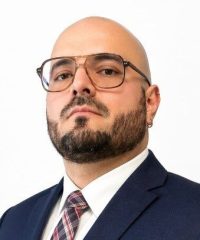
Juan Carlos Anguiano, MD, MPH

Dr. Juan Carlos Anguiano is a Mexican physician and public health specialist whose work spans preventive medicine, epidemiology, and health systems strengthening. He earned his MD from the University of Guadalajara and his MPH from Mexico’s National Institute of Public Health, where he completed specialty training in Preventive Medicine. Before his doctoral studies, he worked as a Community Health Specialist and Epidemiologist at the Mexican Institute of Social Security (IMSS). He is currently pursuing a DrPH at the Harvard T.H. Chan School of Public Health. His doctoral work focuses on strengthening health institutions, improving social conditions, and enhancing responses to public health challenges across Latin America.