



Back
SEARCH AND PRESS ENTER
Recent Posts

In our ongoing “Dear Mentor” series, medical students submit questions about the challenges they face in training and beyond. Our mentors—residents, fellows, and attending physicians—share their perspectives to encourage and guide the next generation of healthcare professionals.

Balancing Multiple Roles in Medicine

Dear Mentor,  

Many students enter medical school with the assumption that they will primarily serve as clinicians. However, throughout training, they are exposed to physicians who contribute in multiple capacities—conducting research, leading organizations, mentoring trainees, developing new initiatives, while continuing to care for patients. Seeing these diverse career paths can be both inspiring and overwhelming, especially when it is unclear whether pursuing multiple roles is realistic or sustainable.

How can students determine whether pursuing multiple roles is realistic, and how do successful physicians balance these responsibilities without compromising patient care?
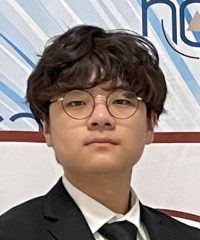

Stephen Park

Stephen Park

Sophomore at Washington University in St. Louis

Response From the Mentor

Dear Stephen,

Many students assume the path is a straight line: train, graduate, see patients, repeat. Mine has not been. I care for children, conduct clinical trials, lead physician teams building clinical AI, advise health organizations, serve as a pastor, and am studying for a Master of Divinity. So I understand the inspiration and the anxiety behind this question. Let me be honest from the start: this is not the easy path. The traditional clinical route is simpler, more predictable, and entirely honorable. If you add roles, do it because you are drawn to the work—not because you think you should.

If you do feel that pull, here is what I have learned.

Say yes to almost everything early. In training and your first years out, breadth is a gift—research, advocacy, teaching, administration—because that is how you discover your own appetite. Later, you narrow. Early breadth and later focus is a far healthier arc than the reverse.

Then apply, apply, apply. I still apply to new roles every few weeks, more than a decade in. You genuinely do not know what is out there—or even your own financial worth—until you see the opportunities. Most people never find out, because they disqualify themselves first, telling themselves they are not qualified enough. Hear me: if you are a physician, you are plenty qualified. Do not be afraid to not know something, or to not be the best in the room. Try your best, take the leap, and you will learn the skills along the way. The people who advance are rarely the most credentialed—they are the ones who actually applied.

And find mentors. Ask, ask, ask. Stay curious. Reach out on LinkedIn, join physician groups, message someone whose career you admire. People are far more generous than you expect.


Now the most important part, and the part rooted in my faith: whatever roles you hold, care for people—all of them. Your patients, yes, but also the staff beside you, those you oversee, your employers, and the janitor emptying the trash at day’s end. For me this flows from my faith. Two verses guide how I try to carry myself: “Let your speech always be gracious, seasoned with salt, so that you may know how you ought to answer each person” (Colossians 4:6), and “with all humility and gentleness, with patience, bearing with one another in love” (Ephesians 4:2).

This is not only conviction; it is practical, and increasingly rare. In every initiative I have joined, the people who rise share two traits: they try to fix problems, and they genuinely care about others. In an age of AI and virtual meetings, that second trait has become more valuable, not less. Technical skill is abundant; people who make others feel seen are not.

Through all of it, patient care stays the anchor that keeps the rest honest. The clinical encounter reminds me what the other work is for. Protect that time rather than treating it as the flexible part of your schedule, and be honest when you have taken on too much. If a role ever erodes the attention your patients deserve, recalibrate—do not push harder.

One last principle reshaped me: give others exponentially more benefit than they could ever give you. This was hard. For years I felt I was always serving, often without thanks, with no one helping me in return. Changing that posture—giving freely, without keeping score—changed everything about how I work. Generosity turns out to be its own reward, and it returns in ways you cannot predict.

So you do not have to choose today between being “just” a clinician and something more. Be an excellent clinician first. Stay curious, apply boldly, care for everyone in front of you, and give more than you take. The physicians who seem to do everything are not superhuman—they found a thread worth following and walked it faithfully. For me, that thread is children, my faith, and the people God places in my path. Find yours, and build it one faithful season.

Joseph Lee, MD

Joseph Lee Suit Headshot

Joseph Bokum Lee, MD

Dr. Joseph Bokum Lee is a board-certified pediatrician whose calling has carried him from the classroom to the clinic, the executive suite, the pulpit, and the frontier of clinical artificial intelligence. He began as a Teach for America middle school science teacher before earning his MD at Rush Medical College and completing pediatric residency at the University of Chicago Comer Children’s Hospital, alongside a master’s in public policy. He has since served as a Chief Medical Officer, founded a school-based health practice, directed a network of more than 200 providers, and now leads physician teams training large language models for clinical use while conducting clinical trials. A pastor currently pursuing a Master of Divinity, he grounds his work in his Christian faith. He continues to care for children, mentors students across the medical pathway, and holds medical licenses in fourteen states.

Leave Your Comment