





Back
SEARCH AND PRESS ENTER
Recent Posts

Why a Meaningful Nonclinical Career May Be in Your Future

By John Jurica, MD, MPH, CPE, FAAPL

I arrived to my meeting ten minutes early. That was early enough to find the room eerily silent. I took a seat at the far end of the mahogany table large enough to sit sixteen. As the leadership team filtered into the boardroom, the air filled with the low hum of safe, practiced small talk. A few gave me a nod, the kind of polite, non-committal gesture you give a stranger in an elevator. Then the door clicked shut as the CEO entered. He didn’t just walk in; he shifted the room’s vibe, taking his seat as the casual chatter abruptly faded.

I had recently been selected as the hospital’s first Vice

President for Medical Affairs (VPMA); a position created as a stepping stone to the position of Chief Medical Officer (CMO). As I sat there, I felt awkward, anxious and yet energized.

Awkward because this setting was foreign to me, as to most physicians. While many of us felt very comfortable sharing our thoughts and pontificating during a medical staff meeting, sitting in a boardroom at a table with chief-somethings (chief executive officer, chief financial officer, chief nursing officer, etc.) represented a new level of accountability.

Anxious because I felt that for the next few weeks this experienced group of leaders would be scrutinizing everything I said. And they would be deciding whether I should be welcomed as a trusted ally, or an interfering clinician who didn’t understand the difficult choices that needed to be made.

Yet, I was energized to be able to learn from these seasoned professionals, some with a clinical background, all with management experience, and a few with a deep understanding of the unique and fascinating financial workings of a nonprofit community hospital.

Joining that team, and later advancing from part- time VPMA to full-time CMO enabled me to leave the practice of medicine completely. Along the way, I took several steps to facilitate my transition. I completed a master’s degree in public health while still in practice. I joined the American College of Physician Executives, now known as the American Association for Physician Leadership (AAPL). I served as a board member of a local nonprofit hospice. And I completed additional education and certification through the AAPL as a Certified Physician Executive (CPE).

During that evolution from clinician to physician executive, it occurred to me that many other physicians were following similar paths. Sometimes it was because they wanted to grow and pursue new challenges. Too often, it was because of the growing pressures of practicing medicine with its burnout and moral injury. Those growing pressures seemed to be exacerbating a new phenomenon: physicians were pursuing nonclinical careers.

Why Pay Attention?

If you’re a medical student or a physician just starting your practice, why is this important? You certainly don’t have to worry about these jobs currently. However, knowing what is possible later can help your planning now.

If you explore future nonclinical options now, you

can take some actions that will otherwise be off the table later. For example, if its early enough in your medical education, you might be able to pursue a second degree while in medical school. Most of these decisions are made prior to matriculation, but I have met physicians who were able to add an MBA or MPH while still in medical school.

Also, you may want to reconsider your plans for residency. If you’ve been looking at a primary care field such as family medicine, internal medicine, or pediatrics, you might also consider preventive medicine. In most programs you’ll be able to complete an MPH while in your residency, and you will still be eligible for licensure to practice medicine. Interestingly, many preventive medicine graduates move right into management positions based on the administrative and public health skills they learned during residency.

The other benefit of having an awareness of nonclinical options is that if you become unfulfilled or dissatisfied, more options will become available when needed. Without the nonclinical options, you will be limited to finding a new position with another hospital or another clinic, or starting your own practice. Given that many employers demand a fairly strict covenant not to compete, finding a new job may require onerous commutes or the need to move to a different community.

What’s Driving the Growth in Nonclinical Careers?

Many of these career options have been around for decades. However, the variation in such activities, and the number of physicians transitioning into them has exploded. That means that current medical students and young physicians are much more likely to shift into this pool of nonclinical careers than ever before.
Unfortunately, they often enter the clinical workforce with no understanding of the large number of options available to them should they find that clinical work is not satisfactory. It also means that those industries that require the knowledge and experience of medical school graduates and licensed physicians may be wasting valuable healthcare dollars and time to find the help they need.

Medicine and healthcare are complex. And the complexity grows daily. This growing reality drives the need for very well-educated experts in their fields to review, translate, and advise in hundreds of different ways.

For example, the number of medications grows exponentially, and the need to develop, market, and adopt their use requires physicians be involved at multiple levels. In hospital and outpatient settings, learning to use new EMRs, assigning correct diagnoses, and meeting insurance requirements creates a demand for physician experts who understand those systems.

There is a need for physicians who know how to measure and improve quality and reduce errors in patient care at the population level. And physicians are needed as medical writers to educate the public and their peers, and write technical documents to meet regulatory requirements. Demands for physician input exists in technology, coaching, consulting, and federal, state, and local governmental institutions.

How Your Education and Training Serves These New Nonclinical Roles

It might be helpful to give a few examples why your medical background is essential to these roles. Let’s start with roles in the hospital setting. The titles for such roles include physician advisor, medical director, chief medical officer, chief quality officer and chief patient safety officer.

Your knowledge of anatomy, physiology, microbiology, and medical informatics is essential. And your experience interacting with patients, reviewing medical records, following hospitalized patients, and how to communicate clearly are needed for each of those roles.

When moving up from physician advisor to medical director you will be expected to incorporate more of the business and management skills, and manage your direct reports (persons who report directly to you). You will need an understanding of budgets. And you’ll learn about measuring patient safety and quality outcomes and running performance improvement projects to improve care.

In medical school you may get a hint of those by attending hospital-based patient huddles, or a root cause analysis (RCA) for a sentinel event. In residency you may co-lead an RCA. Once in hospital executive leadership you will be accountable for overseeing the process and implementing the recommendations.

In the biopharmaceutical arena, the typical jobs include medical science liaison (MSL), medical monitor, associate medical director, medical director or safety officer. The MSL teaches prescribers how and when to use new drugs safely and appropriately. Your medical background and ability to read and critique clinical studies is key to this position.

Other pharma jobs are open to residency graduates and those with post-residency experience, particularly for those who use certain drug classes in practice. And while writing a clinical research protocol is left to those with research experience, formerly practicing physicians often work as a principal investigator at a single site, a medical monitor for multiple sites, or medical director who oversees the roll out of a new drug.

Another growing field for young physicians to consider is medical writing. It is a nonclinical career that often starts as a part time venture, but many young physicians eventually transition to full-time employed positions or freelance writers. The latter option provides much more freedom, is completely remote, and allows for working from anywhere. And like any profession, a subset of professionals is naturally good at, and drawn to, writing.

The need for skilled physician writers can be found in several arenas, including patient education, continuing medical education, journalism, technical medical writing, and medical communications. Biopharma companies, medical device companies, and contract research organizations (CROs) hire technical medical writers whose work is key to drug and device approval.

What Should You Do Now?

Whether you’re still in medical school, or early in your career, there are several things you can do learn about this realm of opportunities. The first is to remain curious. When you’re in an educational setting, it may appear that everyone is committing 100% of their waking hours thinking about your education. But that’s obviously not true, and it can be quite eye-opening to hear what clinicians know about this topic, what they have already tried, and what they may be considering.

As you get to know your instructors, mentors, and role models, take a few minutes to get to know them better and ask them questions such as:

  • How long have you been in this position?
  • What were you doing before that?
  • Do you want to stay in this role indefinitely or are you thinking about a new location or new job at some point?
  • Have you ever thought about unconventional or nonclinical work?

Next, commit to taking 100% accountability for your career success and satisfaction. Be very intentional about defining what success looks like.

When I started my medical training, I was happy to have been accepted to medical school and I trusted “the system” to help me reach my end goal and help me find the “right” first job following residency.

However, I did not speak to many practicing physicians about what the meant. And I was naïve about the real challenges of working as a family physician in a small group. I later discovered that my practice did not meet my childhood fantasies, which were based on TV dramas and family members’ opinions. I became disenchanted, and burnout was looming.

Luckily, my personality included an adventurous side, so I often volunteered when asked to try new things such as serving on my hospital board. And I wanted to pay off my student loans so I agreed to be a part- time physician advisor for my hospital’s utilization management (UM) department, and later helped out with its occupational health program.

That was my first introduction to part-time nonclinical jobs.

After working in those UM and Occ Health positions, I became wanted to learn more about management roles. At the time, I was on the hospital Continuing Medical Education Committee. I became the committee chair, which made me the point person when the Illinois State Medical Society sent a team to do our accreditation survey.

Based on the success of our survey, the ISMS asked me to join its Committee on CME Accreditation. I met the committee chair, whose “real job” was that of hospital Chief Medical Officer. Soon thereafter he became my mentor. One of the first things he shared with me was the need for more physician executives in hospitals and other healthcare settings.

That’s when I became intentional about my career.

Looking back to that first day as VPMA, I really had no idea how my life would change as a result of my decision to take the job and start a path to leaving clinical medicine. I truly loved my days as VPMA, and later CMO. I worked with awesome direct reports including the Directors of the Pharmacy, Quality Improvement, Patient Safety, Utilization Management, Laboratory Services, Radiology, and others. At one point, I was responsible for a budget of approximately $200,000,000. And I led our hospital to achieving Top 100 Hospital Designation six times before my withdrawal in 2014.

One of the things I did after leaving that position, because I was so interested in the growing evidence of burnout and moral injury, was to start a podcast called Physician Nonclinical Careers, which I continue to produce weekly. Looking back now, I wish I knew more about the options I’ve heard about on the podcast while I was still in medical school.

image24

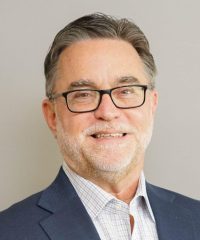
John Jurica, MD. MPH. CPE. FAAPL

John Jurica is a board-certified family physician who began doing nonclinical side jobs early in his career as utilization management physician advisor and occupational medicine medical director. He then transitioned to hospital administration, first as VP for Medical Affairs, and then as Chief Medical Officer.
He completed a master’s degree in public health at the Medical College of Wisconsin while in practice, and certification as a physician executive (CPE) through the American Association for Physician Leadership. He left his CMO position to partner in an urgent care start-up in 2014, where he continues to serve as owner and medical director.
In 2017, John started producing the weekly Physician Nonclinical Careers Podcast, where he presents interviews with physician entrepreneurs, medical directors, hospital executives, managers, coaches and other experts in physician career transition.