

Back
SEARCH AND PRESS ENTER
Recent Posts

Q&A with Third-Year

Medical Student Nayana Vuppala:

A Student’s Global Reach

By Kendrick Yu, MS3 at the University of Birmingham Heersink School of Medicine

Editor’s Note: Questions and answers are not direct quotations. Paraphrasing and edits were made to accommodate for the article’s flow and style. The interview was held via Zoom. 
Kendrick: Before we begin, could you please introduce yourself?

Nayana: My name is Nayana Vuppala, a current 3rd year at the University of Alabama at Birmingham Heersink School of Medicine. Also, I am a part of the Primary Care Track and pursuing a recognition of distinction in global health.


Kendrick: To clarify, what’s the difference between “Public Health” and “Global Health?”

Nayana: Public health is a more general look at what might be wrong with the system and how to fix it while global health can be seen as a subsection of public health. I like to view global health as the interaction of systems between different countries including international systems and organizations without cultural, language, socioeconomic, or geographic barriers. .


Kendrick: What are some experiences that you have in global health?

Nayana: The education system that I grew up with emphasized cultural and societal aspects including language which I have been learning Spanish my whole life. However, to fully understand how a culture functions, I had to immerse myself in the culture. In high school, I had the opportunity to travel to Panama and work with the local population to teach them about health literacy and how to utilize their healthcare resources effectively. During medical school, I traveled to the Dominican Republic and collaborated with their medical students. I got to see how their system was set up, how they learned, and exchanged different ideas such as us teaching them how to use ultrasound.


Kendrick: How do the countries that you visited differ from the United States?

Nayana: In the countries that I visited, most of them Spanish-speaking, there was an emphasis and value placed on family and community. We saw neighbors driving patients to the hospital even if it was 50 miles away, and they cooked meals together. This becomes apparent in countries that have limited resources as different resources are prioritized for patients, such as masks for TB or even gauze for wounds. Although there are communities like that here [United States], we are more of an individualistic society and the resources are, for the most part, readily available. The resources that limit rural care in Panama or the DR are different from the US which is more provider centric.


Kendrick: What do you think students should be taught to understand other global systems?

Nayana: I think there should be a focus on cultural competence and empowering students to learn different types of treatment in other countries such as alternative medicine. The standards for Western medicine are not applied everywhere and things like acupuncture in Eastern medicine are not considered. So, if a patient comes in desiring acupuncture, instead of dismissing it, understanding why they would want it, reflecting on my own bias, and making a recommendation considering both sides is important.


Kendrick: Why is global health so important?

Nayana: Global health is more than just traveling to countries and understanding them. I think it extends into, how does what I do here affect others around the world? Technology and discoveries here extend to the global environment and vice versa. Things like HIV/AIDS research is a global effort as some countries have more resources and can supplement the efforts of another region which may not have the same financial background.


Kendrick:  What and how can a medical student do in their career to prepare themselves for global health? Or what type of mindset?

Nayana: Be curious, open-minded, and don’t be afraid to engage. Getting connected to global health does not necessarily have to be joining a project that focuses on a specific outside country. There are always expansions into global health and connections into a wider picture such as talking to your professor about their experiences in a different country or another student about the languages that they know. Although it may be intimidating to email or talk to new people, within academic medicine, a lot of people want you to succeed in global health. Research the programs at your university and reach out if you have more questions, you must take that first step. The Fullbright scholarship, the NIH, WHO volunteering, and the local public health department, are all starting points.

image23

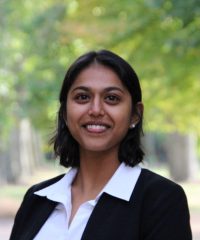
Nayana Vuppala

Nayana Vuppala is a medical student at the University of Alabama at Birmingham Heersink School of Medicine with a strong interest in public health, health equity, and interdisciplinary care delivery. Her passion focuses on improving access to care for underserved populations through community-engaged initiatives and systems-level innovation. She is particularly passionate about addressing structural barriers to healthcare and advancing collaborative models that integrate clinical medicine, public health, and social support systems.