

By Walter Choi, MD
Back
SEARCH AND PRESS ENTER
Recent Posts
- April 1, 2024
Kyoung Ryul Lee, MD, PhD, CEO of the SCL Group, Seoul Clinical Laboratory, a Specialist in Laboratory Medicine
Kyoung Ryul Lee, MD, PhD, CEO of the SCL Group, Seoul Clinical Laboratory, a Specialist in Laboratory Medicine What motivated your decision to attend medical school and become a physician? Could you share some particularly
- August 5, 2024
ISSUE 28
FROM THE PUBLISHER W elcome to the 28th edition of the World Asian Medical Journal. This issue encompasses a captivating cover story featuring an interview with Dr. Huang, a distinguished medical professional whose journey from
- August 5, 2024
Youngmee Jee, MD, PhD | Inspirational Asian Healthcare Leader
INSPIRATIONAL ASIAN HEALTHCARE LEADER Youngmee Jee, MD, PhD Commissioner of Korea Disease Control and Prevention Agency INTERVIEW 01 Tell us how you decided to pursue a career in medicine. How did you choose your specialty?
- September 21, 2024
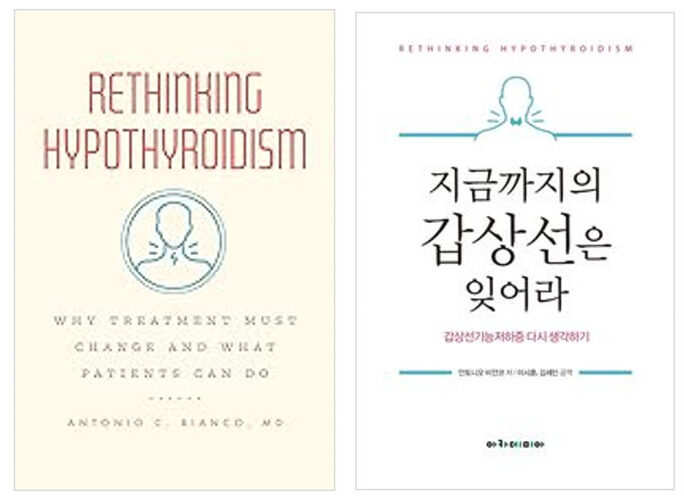
Rethinking Hypothyroidism
Rethinking Hypothyroidism: Why Treatment Must Change and What Patients Can Do Author: Antonio C. Bianco, MD Translated by: Semin Kim, MD & Sihoon Lee, MD About the book “Rethinking Hypothyroidism” The limitations of current
- October 1, 2024
The Internet of Things (Revision 2021)
Purchase LinkThe Internet of Things (Revision 2021) Author: Sam Greengard We turn on the lights in our house from a desk in an office miles away. Our refrigerator alerts us to buy milk on the
- October 1, 2024
Superconvergence
Purchase LinkSuperconvergence Author: Jamie Metzl In Superconvergence, leading futurist and OneShared World founder Jamie Metzl explores how artificial intelligence, genome sequencing, gene editing, and other revolutionary technologies are transforming our lives, world, and future. These
- October 12, 2024
The Strategic Importance of Location in the U.S. for Foreign Bio and Pharma Companies
The Strategic Importance of Location in the U.S. for Foreign Bio and Pharma Companies DoHyun Cho, PhD (CEO, W Medical Strategy Group) The U.S. Market: A Cornerstone of Global Expansion For pharmaceutical and biotech companies,
- October 12, 2024
South Korea’s Healthcare Crisis: Beyond the Numbers
South Korea’s Healthcare Crisis: Beyond the Numbers Dongju Shin, Dong-Jin Shin INTRODUCTION The South Korean healthcare system has recently plunged into a significant crisis following a February 2024 announcement by the government to increase medical
- October 14, 2024
Overcoming Disparities in Gastric Cancer Care
Overcoming Disparities in Gastric Cancer Care Chul S. Hyun, MD, PhD, MPH Gastric Cancer and Prevention Screening Program, Yale School of Medicine, New Haven, CT Gastric cancer is the fifth most common cancer worldwide,
- October 15, 2024
The Global OR – An Introduction to Global Surgery
The Global OR – An Introduction to Global Surgery Kee B. Park, MD, MPH, Dawn Poh, MBBS, MRes Introduction An estimated 5 billion people worldwide lack access to timely, affordable, and safe surgical care, including
- November 1, 2026
- FEATURED COVER STORY
My Father’s Journey From Gaesong to an American Medical Degree
My father and I took a trip to Chicago in 1995. We visited the storage space where he had lived during his first summer in America. It was a tearful moment. There had been no bed or bathroom, and he had to bathe outside in the dark. The restaurant owner had allowed him to sleep there while he washed dishes, made ice cream by hand, peeled potatoes, and cleaned the restaurant after closing. This was the only way he could save money.
He earned $80 a month for that hard work. But the work did not discourage his commitment to becoming a medical doctor. He had decided in ninth grade that he would go to America for higher education. He had no idea how difficult it would turn out to be.
Gaesong and the Decision to Leave
My father, Chai Chang Choi, was born in Gaesong, Korea, on January 12, 1907. He was the eldest son of farmers who raised the famous Korean ginseng, which provided a relatively comfortable childhood. His missionary school was at least three miles from the family farm. Nevertheless, he was always the first to arrive in the classroom. Sometimes he took farm products to market before school and was able to save money from this assignment.
At school, he was impressed and inspired by teachers who had been educated in America. Their forward looking thoughts and open attitudes were refreshing in a society shaped by Confucian ways. Their Western clothing also impressed him. Compared with traditional Korean clothing, it seemed more colorful to the young student. That early impression stayed with him, and he wore clean and proper clothing throughout his life.
The teachers described America as a land of opportunity. By ninth grade, my father had decided to study there, despite his limited English and lack of money or connections. Japanese colonial policies were becoming more intolerable every year, strengthening his wish to leave. His parents did not object, and at nineteen he began applying for a passport and visa with help from his teachers.
The application went through the Japanese controlled foreign service office. A local officer was amazed by the tenacity of this young man from an ordinary farming family. He needed an acceptance certificate from an American college, and his English teacher, who was studying at Yale University, arranged one from Lynchburg College in Virginia.
It took a year to obtain passport permission. The good news brought growing anxiety. He still had to pass an English examination, and flooding had damaged his parents’ ginseng harvest. The cost of travel would be a difficult commitment for them. He went alone to Seoul for the examination at the American Consulate, where a kind Korean employee helped him pass.
Once his visa was approved, he bought his first Western suit, a couple of shirts, two pairs of socks, a suitcase, and a toothbrush and toothpaste. These were his possessions for the long journey. For his passport photographs, he had borrowed a friend’s suit. Despite the poor harvest, his parents raised 280 won, approximately $140 in 1927. His limited budget did not dampen his excitement about going to America, a country entirely unknown to him.
An Uncertain Beginning in America
His mathematics teacher, Gyunam Choi, traveled with him. Proficient in English, he was a kind companion, like a big brother. They left Busan on a Japanese freighter, paying approximately $80 for third class passage. They shared quarters with about thirty people, mostly Chinese or Filipino laborers. Poor accommodations and seasickness made the journey through Yokohama to Honolulu seem very long.
Honolulu seemed a small, sleepy port city to my father. He noticed its large Asian and Polynesian population, including Korean laborers. Syngman Rhee was organizing Korean independence activities there, and Dr. Youchan Yang, who later became Korea’s ambassador to the United States, was practicing medicine.
When they reached San Francisco, Mr. Paik, a Korean newspaper editor and a friend of his teacher, welcomed them. He took them to a restaurant owned by Mr. Jueun Yang, an unofficial host to arriving Korean students. Mr. Yang even brought packed food and drinks to the station for their train journey to Chicago. My father remembered that generosity all his life and always tried to help struggling Korean students in America.
They chose Chicago because they hoped to find work before the school term. My father arrived with only $50. Minister Joontaek Noh provided shelter at his church and found Gyunam Choi work as a cook in an American home. My father obtained a hotel job through an employment agency, paying $5 for the placement and another $5 for proper shoes.
His first assignment was to deliver food to Room 408. He did not understand that the room was on the fourth floor, and the delivery took too long. The guest complained, and the manager dismissed him without hearing his explanation. His English was too limited to obtain any sympathy.
He had not had a proper meal that day and could not even ask for one before leaving. By evening, he was unemployed and did not know how to return to the church. A policeman helped him find his way. He was very homesick in the lonely foreign country and cried for a long time. The agency fee and new shoes had depleted his reserve, making him even more nervous.
A minister accompanied him to Korean restaurants to look for work. At one, he met H. K. Park’s grandfather, who was working as a waiter. They met again in Washington in 1950 and became good friends. Employment opportunities for Asian students were limited, and three Korean restaurants employed most of the twenty Korean students studying around Chicago.
One kind owner hired my father as a general helper and gave him the storage space where he could sleep. During that summer, he also met Korean students from wealthy and well established families. These friendships gave him a new perspective, since he had come from an ordinary farming household in a provincial town. Some later became politicians, artists, educators, and physicians in Korea.
Gyunam Choi went to the University of Michigan for graduate study. Their busy schedules allowed little contact until they were reunited in Seoul in 1945. His former teacher later became chancellor of Seoul National University and minister of education.
Working His Way Through College
At the end of that summer, my father left Chicago for Lynchburg College with $200 in savings. A Ford sedan cost approximately $300 then, but his savings did not cover even half his college expenses. Arrangements for student work had already been made. Nevertheless, the college found him a job tending the boiler at the president’s residence and a small adjoining room in which to live.
He began feeding coal into the boiler at five in the morning and worked again late at night. This habit made him an early riser all his life. He was the first and only Asian student at Lynchburg. Even “yes” and “no” were difficult because answers to negative questions worked differently in Korean. Sometimes he answered incorrectly when kind people offered him meals.
He studied English, French, chemistry, and biology. His classmates had completed twelve years of schooling, while he had completed ten. With poor English and constant financial worry, the courses were difficult. But teachers and students were exceptionally kind and sympathetic. He studied
with dictionaries beside him and barely passed his freshman courses. He wished he could attend a preparatory school, but his finances and desire to finish medical education as soon as possible would not permit it.
There were also many American customs to learn. Exchanging pleasant greetings with strangers later helped him become a friendly physician. With female students, he had to learn unfamiliar etiquette, including helping them sit down in the dining room. He ate soup noisily, as he was accustomed to doing in Korea, and drew many eyes. He tried to be careful, but old habits were difficult to correct. He noticed male students showering before dinner and later learned they were trying to impress the women. He envied students who mingled easily at dances.
To save money, he washed his clothes by hand, bought a $1.50 iron, and repaired socks and underwear with a needle and thread. He had one suit from Korea. During his first year, he bought only a pair of pants, two pairs of socks, and two neckties. He kept his limited wardrobe clean, especially for Sunday church.
The local Methodist church supported the missionary school and hospital in Gaesong and had pictures of the city. When members learned where he came from, they welcomed him with open arms. Sunday dinners in their homes gave him a break from the boiler room and a chance to observe American family life. He always appreciated their welcome.
After his first year, Lynchburg had no scholarship or further work available for him. A minister found Emory and Henry College in rural Virginia, which offered a partial scholarship and summer work cutting grass and cleaning a swimming pool. During the school year, he carried bricks at a construction
project and worked in the dining room. Heavy labor was unfamiliar and difficult for his small frame. The dining room food was poor, but it was free, and he was grateful.
His English improved, making his studies easier. A seminary student took him on Sunday visits to rural communities, where some residents had never seen an Asian person. Kind farmers welcomed him into their homes and shared bountiful dinners. Work and study left so little time that, after two years in America, he still had not written home.
He accumulated $300 in debt. Unable to find enough employment nearby, he sought a college near a larger city. A kind minister cosigned his debt so he could transfer to Emory University near Atlanta. The university was familiar to Korean students, and one of his missionary school principals had graduated there.
Employment remained difficult for Asian students and professionals. A Korean MIT engineering graduate had been unable to find work in his field and had opened a chop suey restaurant in Boston. My father visited him in 1945 and found him still running it.
In Atlanta, my father became a waiter at a restaurant owned by a Japanese American, working alongside three Korean students. The owner provided a small space in his apartment for minimal rent. After two isolated years, Korean companionship and Asian food were welcome. My father also realized that his earlier isolation had helped his English improve.
He worked at least six hours a day and had only one day off a month. He saved small change in a sealed wooden crate, following a Gaesong merchants’ practice called a “dummy bank.” When he opened it before the school term, he found $400. He celebrated by buying a $17 suit, $5 shoes, and a $3 hat.
His days began with toast and milk provided free by the restaurant, followed by classes, laboratory work, and study in the library. He worked from five until eleven in the evening, then studied for two more hours. Weekend shifts began at ten in the morning. Before putting away his earnings, he kept twenty cents for streetcar fare and thirty cents for lunch.
One day, William Weems, the son of his Gaesong missionary school principal, came into the restaurant. He was studying aviation engineering at Georgia Tech. Their happy reunion began a lifelong friendship. They met again in Washington decades later, after William had retired from MIT and was working independently as a plumber.
Becoming a Physician
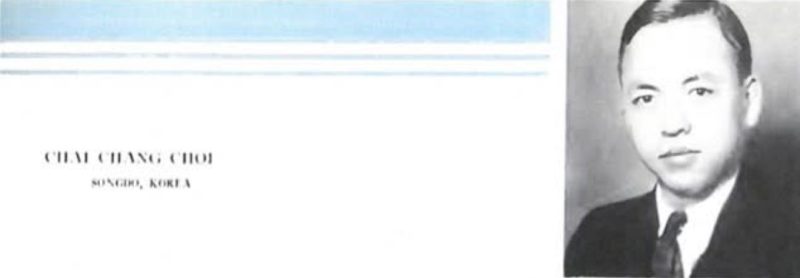
My father completed his premedical studies in 1930. Medical school was competitive and expensive, and the Great Depression made work harder to
find. He applied without much hope of acceptance and considered changing careers. A fellow Korean student proposed opening a restaurant, and my father invested his $400 savings. Fortunately, the money in his dummy bank had been safe during the banking crisis.
They moved to Nashville. A Korean seminary student’s criminal conviction had made headlines in Atlanta, giving my father another reason to leave. Three Korean students joined them as waiters. The five shared an apartment, hardships, close fellowship, and occasional picnics. Although the business went smoothly, the possibility of running a restaurant for the rest of his life made my father sleepless.
Around this time, his former English and Bible teacher, Minister Yim, visited Atlanta. He brought news of Gaesong and encouraged my father to continue studying medicine. Having faced similar difficulties as a foreign student, he understood. His advice came at a time when my father had no close guardian to guide him.
In March 1931, the Medical College of Virginia accepted him. He replied by telegram and told his partner he would leave the business. He lost his hard-earned investment, but he never regretted it. He was thankful that he could attend medical school.
My father needed to earn tuition money before the term began. He had only $100, and finding a job was a must. On his way to New York, he stopped in Richmond to buy an anatomy textbook. He also stopped in Washington, where he met Korean students who became close friends after Korea’s liberation. In New York, he stayed at a Korean church, the main place where students could gather. A room cost $1 and a meal twenty five cents. He skipped many lunches to save money.
An older student introduced him to his former job as a housekeeper and cook in a retired physician’s Long Island vacation home. My father arrived with a small bag, his anatomy textbook, and a used left handed golf club given to him by his friend. The physician did not appreciate his arriving with a golf club, but he was impressed by his hardworking employee.
My father prepared three meals a day, cleaned the house, and attended to the garden. His habit of rising early gave him time to walk around the golf course in the morning. He did not know what to do with the club, but he copied other golfers’ swings. Although he was right handed, he played golf left-handed throughout his life because his first club was left handed. Those morning walks were his only recreation that summer. He was very lonely, but he learned to cook Western food and saved several hundred dollars.
When school began, he settled at the Richmond YMCA. The rent was reasonable, and it was close to the school. He thought the YMCA would be patient with him if his payments were late. His class had eighty six students, including three women and one other Asian student. They carried heavy textbooks and wooden boxes of bones through Richmond’s humid weather. Many students smoked during dissection. My father smoked occasionally, but the expense prevented him from becoming a chain smoker.
He needed a microscope for microbiology and pathology. It cost $120, and he arranged to pay for it over two years. Physiology was especially difficult. He felt that studying at three different colleges had left gaps in his preparation. The first year was the busiest of his life as a student and part time waiter. Church on Sundays gave him a break, and friends there offered meals and encouragement. Our family later returned to Richmond many times to visit them. He passed the year owing $200 and was saddened when
six classmates, including his dissection partner, were dismissed.
He returned to New York for summer work. His pride would not allow him to tell friends at school that he worked as a servant to earn tuition money. In
segregated Richmond, many classmates associated domestic service with Black workers. His attitude changed in later life. He became proud that he had done everything necessary to achieve his goal.
On the journey north, he visited an older schoolmate studying medicine at Hahnemann in Philadelphia. They shared lunch prepared over a small stove. My father enjoyed it so much that he never forgot the menu: miso soup, Korean style chicken, and rice. Returning to the Korean church in New York felt like going home. But he waited days for work, ran short of money, and missed meals. A friend employed as a cook invited him to his employer’s back door and fed him several times.
Eventually, he found work as a butler in a wealthy lawyer’s vacation home. He cleaned, served meals, did laundry, pressed suits, and shined shoes. This practice made him keep his own shoes shiny throughout his later life. The household had a Japanese cook who was kind to him. Although his experiences in Korea had left him with resentment toward Japanese people, he treated the cook with respect. The summer passed peacefully, and he even had time to read medical textbooks. He saved $400, then earned another $15 washing cafeteria dishes during a few days in New York before returning to school.
The second year was more interesting, with biochemistry, microbiology, pharmacology, physiology, and introductions to medicine and surgery. He needed new textbooks, an ophthalmoscope, and a blood pressure instrument. Once again, he arranged to pay in monthly installments. Classes began at nine in the morning and ended at five. He worked a couple of hours afterward and studied until midnight, often studying again before school. He was always short of time. Missing even one day was unthinkable.
That summer, another butler’s job offered no place to sleep. He moved to a Long Island tomato and corn farm rented by a Korean minister and his wife. Other Korean students worked there, making the hard labor a little easier. Breakfast prepared by the minister’s wife was the highlight of the day. Syngman Rhee visited and encouraged the students to study and work for Korean independence. My father remained focused on finishing his education rather than entering political disputes.
The third year gave him the feeling of being a doctor. He enjoyed Saturday grand rounds and learning how to obtain a history, discuss a differential diagnosis, and plan treatment. Six more classmates had left, and new students arrived from a two year medical school in West Virginia. He continued to accumulate debt.
After another short summer job as a butler, he tried selling incense in Harlem at the suggestion of Korean students. His earnings were slightly better, but selling in a poor community was difficult. My father was not a good salesman, and he never tried it again. Employment was becoming harder to find, and some discouraged Korean students returned home without completing their education.
The fourth year consisted entirely of clinical courses. He enjoyed assisting surgeons, even when he was only the third or fourth helper, and delivering babies, some in patients’ homes. A rotation at a state mental hospital made him compare Virginia’s psychiatric services with the limited care he understood to be available in Korea.
Several families offered him room and board during the final year. They had followed his progress and knew his hardships. One family had little money, and he appreciated its generosity even more. He repaid his debts and kept those who had helped him informed of his progress. With less financial worry and interesting clinical work, the final year was easier. He passed the written examinations and a stringent oral examination given by four professors. He was happy and proud, but never forgot his parents,
teachers, and church friends.
My father considered neurosurgery, but the training would take too long. He was homesick and wanted to practice what he had learned to help sick people in Korea. His professors recommended Charity Hospital in New Orleans, where he took a general internship with an interest in infectious diseases and parasitology. He was disappointed that there were not many patients with parasites. But for the first time in America, he could learn and treat patients without constant financial worry. New Orleans also
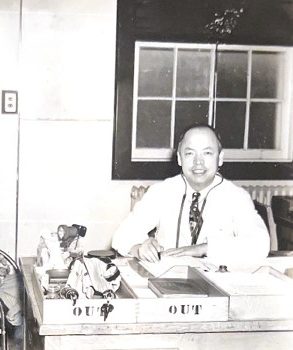
introduced him to French food, jazz, and dancing. Dr. Chai Chang Choi in post-liberation Korea, circa 1946
Returning to Korea
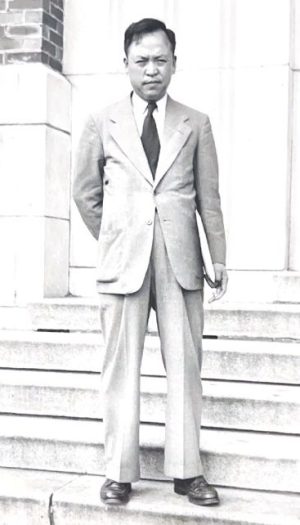
After nine years away, my father worried about his role in Korea. Communication had been difficult, and he had not followed independence politics closely. He boarded an American freighter in New Orleans as its medical officer. During a stop in Houston, a newspaper reporter interviewed him. Introducing Korea to unfamiliar readers gave him even more satisfaction than recognition of his accomplishment.
Passing through the Panama Canal, he knew little of the hardships associated with its construction. Later, as a public health official, he learned about the toll of malaria and helped control it in Korea after liberation.
In Honolulu, Minister Yim welcomed him with Korean food. The expertly prepared naengmyeon was his first experience of the dish. He enjoyed it throughout his life and introduced me to it as a child. It remains my favorite. His teacher described Japanese expansion into Manchuria, restrictions in Korea, and divisions within the independence movements in America and Shanghai. My father understood that Rhee favored diplomatic efforts while others favored more militant approaches. Even Minister Yim’s congregation was divided. This disappointed him, and he decided that his contribution should be as a physician.
On the voyage to Yokohama, he read medical books and worried about inspection. He destroyed independence documents he had hoped to share at home, keeping only a photograph with Rhee hidden inside a thick medical textbook.
A terrible storm made him pray for safety. He also remembered thanking God for the healthy body and courage that had enabled him to complete his medical education. In Yokohama, police questioned him. His Japanese and the officer’s English were poor, making the interrogation difficult. While searching his belongings, the officer took American medicines for himself, then ended the inspection.
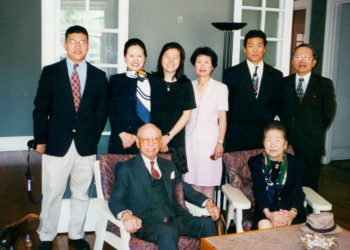
Officials searched and questioned him again in Busan. Japanese merchants and soldiers filled the city, and Koreans were forced to use Japanese in public. The changes made him feel unwelcome in his own country. On the slow train to Gaesong, he saw poor, dispirited Koreans treated as second class citizens. He believed that better education would help them gain respect.
Nobody met him in Gaesong because communication had been poor. He celebrated with family and friends for only a few days. He was anxious to begin working.
He had returned as a physician, ready to practice what he had learned.
A Conversation with Dr. Walter Choi about Dr. Chai Chang Choi
1. When you think of your father today, what small, ordinary moment comes back most vividly? What does that memory tell us about him?
I think of the way he greeted people. He would give them a firm handshake, smile, and make them feel welcome. He had a way of making people feel important. He never forgot the people who had helped him, and I think that had something to do with how he treated others.
He also liked to dress well: tailored suits, pocket watches, hats, and nice shoes. Some of his first impressions of America came from seeing the educators at his high school in Gaesong wearing Western clothes. He wanted to dress that way himself. His children and grandchildren picked up some of that attention to appearance.
And he loved his big blue Cadillac Seville. It had his initials, “CCC,” and the number “25,” for the year he came to America. He was very proud of it.
2. Your father’s journey took him from Gaesong to a medical career in America. How did that earlier life remain present in your household?
One way was through my mother’s cooking. At New Year and family gatherings, she would make Gaesong dishes such as galbi-jjim with ginkgo nuts, kalguksu, naengmyeon, and piji. Those recipes stayed in the
family and were passed along to the next generation.
My father would talk about his long walks to and from school in Gaesong. He also told us about people who had been kind to him when he first arrived in America.
He had no financial support from his family while studying here. It was hard, but he was determined to become a physician and serve people.
He rarely talked about the family he had left behind in Korea. That was much more painful for him.
3. Others knew him as a physician and a founder of KAMA. What did you see within the family that people outside it might never have known?
People saw someone who enjoyed company, told wonderful stories, and was comfortable speaking to a room full of people. They might not have realized how lonely he had been at times.
When he graduated from medical school, no one from his family was there to celebrate with him. He went back to his room and cried. He would also cry when he looked at a photograph of his mother. He never saw her again after leaving Korea.
Later, he worried about my mother and us three children as we adjusted to life in America. We came from a very traditional Korean family, and there was a lot to get used to.
When Korean newcomers moved to the Washington, D.C., area, he would welcome them into his home and try to help in whatever way he could. He knew what it was like to arrive in an unfamiliar country and need someone’s kindness.
4. Did his commitments to medicine and the Korean medical community compete with family time? How do you understand those commitments now?
He was busy with his general practice and had many other interests. We saw him as a traditional Korean father, so we largely accepted that he had responsibilities that kept him occupied.
But being close as a family mattered a great deal to him. He expected loyalty and togetherness. Family, friends, church, and the Korean American community were all important parts of his life.
Looking back, I can see how much he accomplished through those relationships. The people around him were the foundation of his work. At home, we knew how strongly he felt about keeping the family together.
5. While writing your father’s story, what helped you see him differently?
It made me appreciate just how hard the adjustment to America had been for him. He came from a very conservative Gaesong. He had to support himself through school and learn a different way of life, far from his family.
We knew him as our father and as a physician. Writing his story made me think more about the young man who had to find his way here before he became either of those things.
I understood more clearly how much effort it had taken, and how lonely parts of that experience must have been.
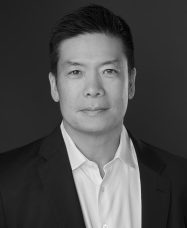
Myung (Scott) Choi, MD
Dr. Myung (Scott) Choi grew up in Alexandria, Virginia. He received his undergraduate degree from Cornell University. He then completed his medical school, internal medicine residency, and gastroenterology fellowship at the Medical College of Virginia. After finishing his training in 2001, he practiced in New Haven, Connecticut for four years, serving as the director of the Esophageal Manometry Unit at Griffin Hospital, and clinical instructor at Yale University. Before joining Gastroenterology Associates in 2006, he served as an attending physician at Metropolitan Hospital in New York City, and assistant professor of clinical medicine for the New York Medical College. While at Metropolitan Hospital, he received an award for the Best Physician-Teacher. Dr. Choi is currently an assistant professor of clinical medicine at yale University. His special interests include fatty liver, inflammatory bowel disease and the role of probiotics in digestive disease. He enjoys skiing, golf and spending time with his family.
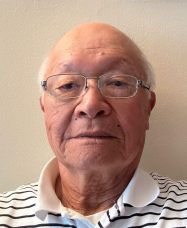
Walter Choi, MD
ARetired Radiologist,
Alexandria Hospital
Dr. Walter Choi was born in Gaesong, Korea in 1939, and later immigrated to the United States in 1954, settling in Alexandria, Virginia. He graduated from the University of Virginia School of Medicine in 1965 and completed his radiology training in 1971. He also served in the U.S. Army as a general medical officer. Dr. Choi dedicated 30 years of his medical career to Alexandria Hospital as a radiologist before retiring. He currently resides in Alexandria, Virginia, with his wife of 60 years. They have three sons, two of whom are physicians, and six grandchildren.